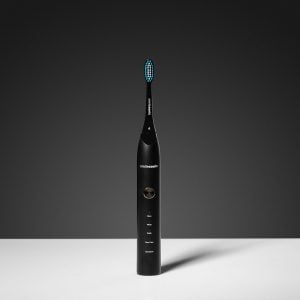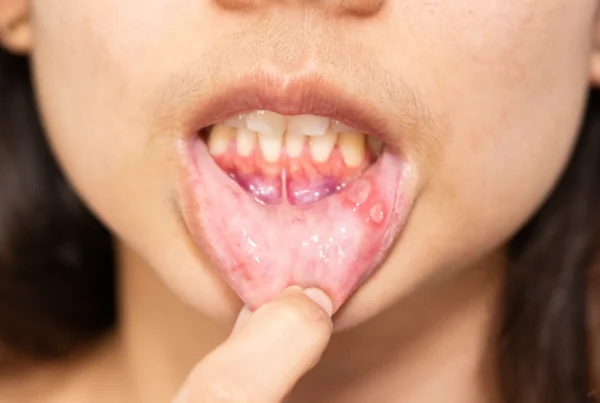


Daily tooth brushing is the foundation of oral hygiene – everyone knows that. But did you know that a regular toothbrush reaches only about 60% of the tooth surface? The remaining 40% consists of hard-to-reach areas, mainly interdental spaces, where food debris, plaque, and anaerobic bacteria responsible for inflammation, tooth decay, and bad breath accumulate.
That is why it is so important to clean interdental spaces regularly and effectively. In this article, we explain why it matters, what cleaning methods are available, and how to incorporate them into your daily routine.
Why Are Interdental Spaces So Important?
Although often underestimated, interdental spaces are where many dental problems begin. Food debris frequently gets trapped there and may ferment, creating an acidic environment that promotes enamel demineralization. These narrow gaps are also an ideal environment for plaque buildup, which over time can turn into tartar, irritate the gums, and lead to periodontal disease.
Uncleaned interdental spaces:
- increase the risk of cavities on the contact surfaces of teeth,
- lead to bad breath,
- cause gum bleeding and inflammation,
- weaken tooth stability over time.
What Methods Are Used to Clean Interdental Spaces?
There are several effective methods that can be adapted to your age, gum condition, tooth alignment, and personal preferences. The key is consistency and proper technique.
Dental Floss
This is the oldest and most traditional method. Dental floss effectively removes plaque and food particles from tight spaces between the teeth. It is ideal for people with healthy gums and evenly aligned teeth.
Advantages:
- inexpensive and widely available,
- provides precise cleaning.
Disadvantages:
- requires practice and patience,
- may irritate gums if used incorrectly,
- inconvenient for people with braces, bridges, or implants.
Interdental Brushes
These are miniature brushes with a cylindrical or conical shape that are inserted between the teeth. They come in different sizes, so it is important to choose the correct thickness for your interdental spaces.
Advantages:
- effective for people with larger interdental gaps,
- ideal for bridges, implants, and orthodontic braces.
Disadvantages:
- less comfortable for very tight spaces,
- choosing the wrong size may damage the gums.
Water Flosser
A water flosser is a device that produces a stream of pulsating water (sometimes enriched with air) to flush food debris and plaque from interdental spaces, gum pockets, and along the gumline. It is the most convenient and effective solution for many people, especially those with sensitive gums, braces, or implants.
Advantages:
- quick, painless, and non-invasive cleaning method,
- massages the gums and improves blood circulation,
- suitable for children, seniors, and people with limited manual dexterity,
- works well in areas where dental floss cannot reach – such as around crowns or bridges.
Disadvantages:
- higher purchase cost,
- requires water access and charging.
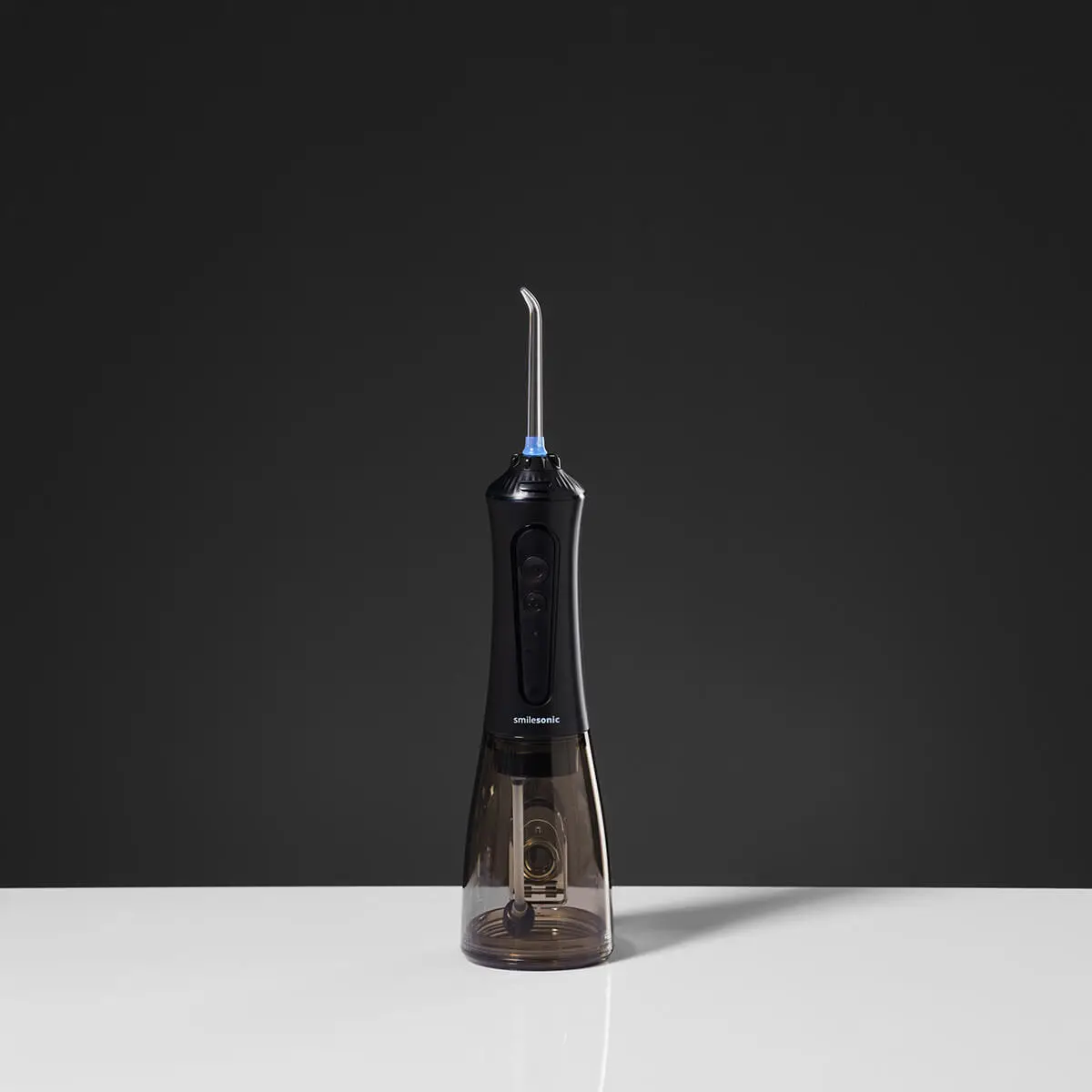
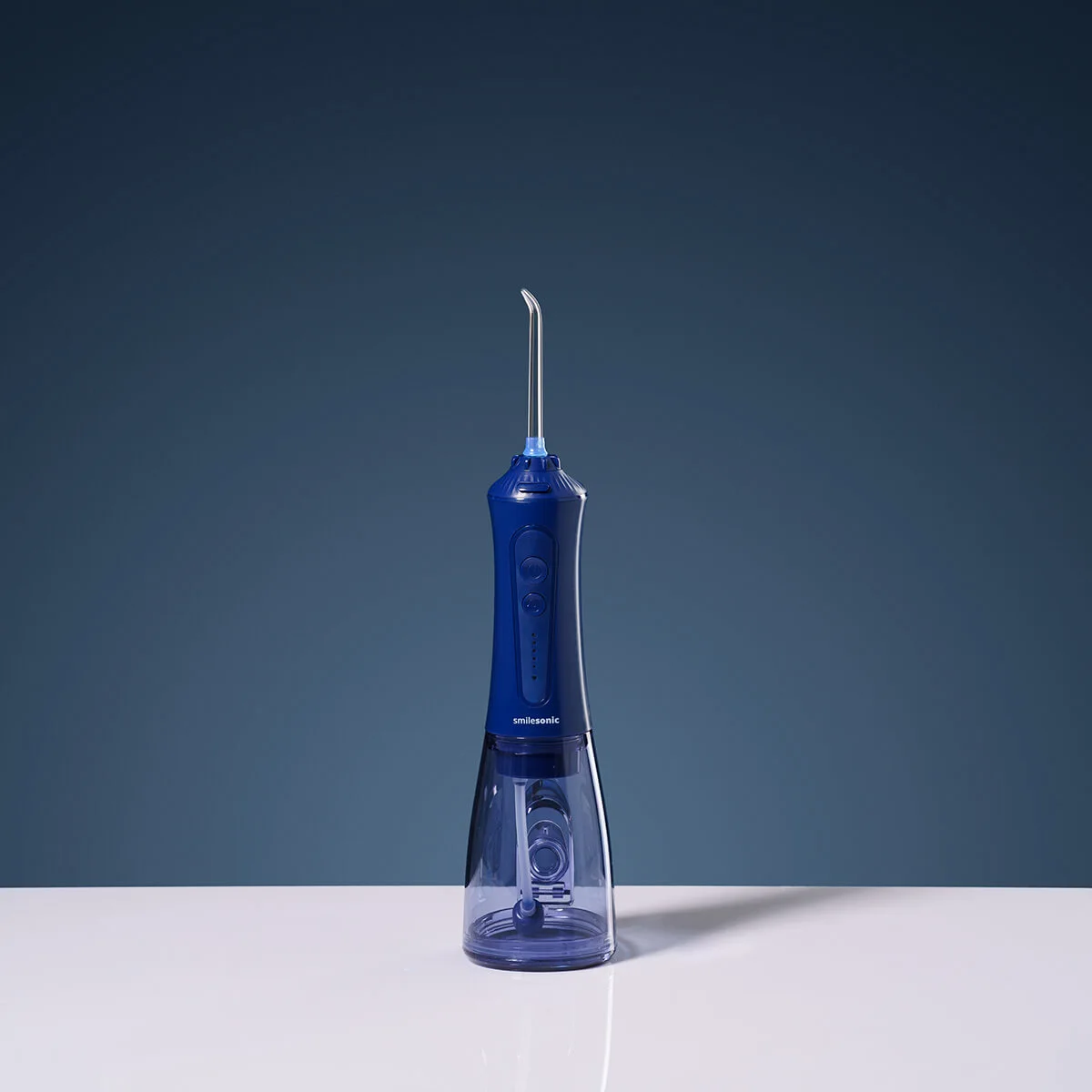
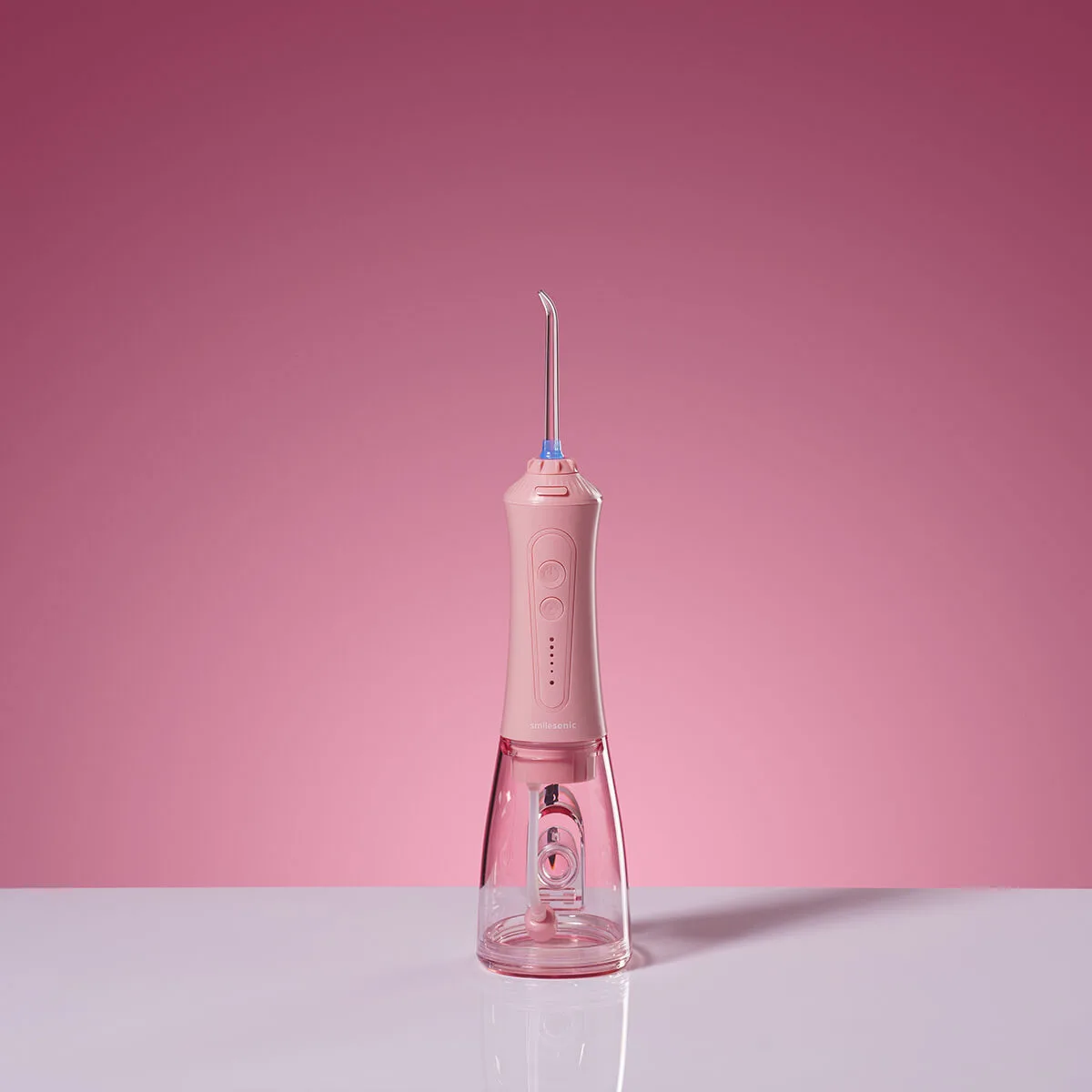
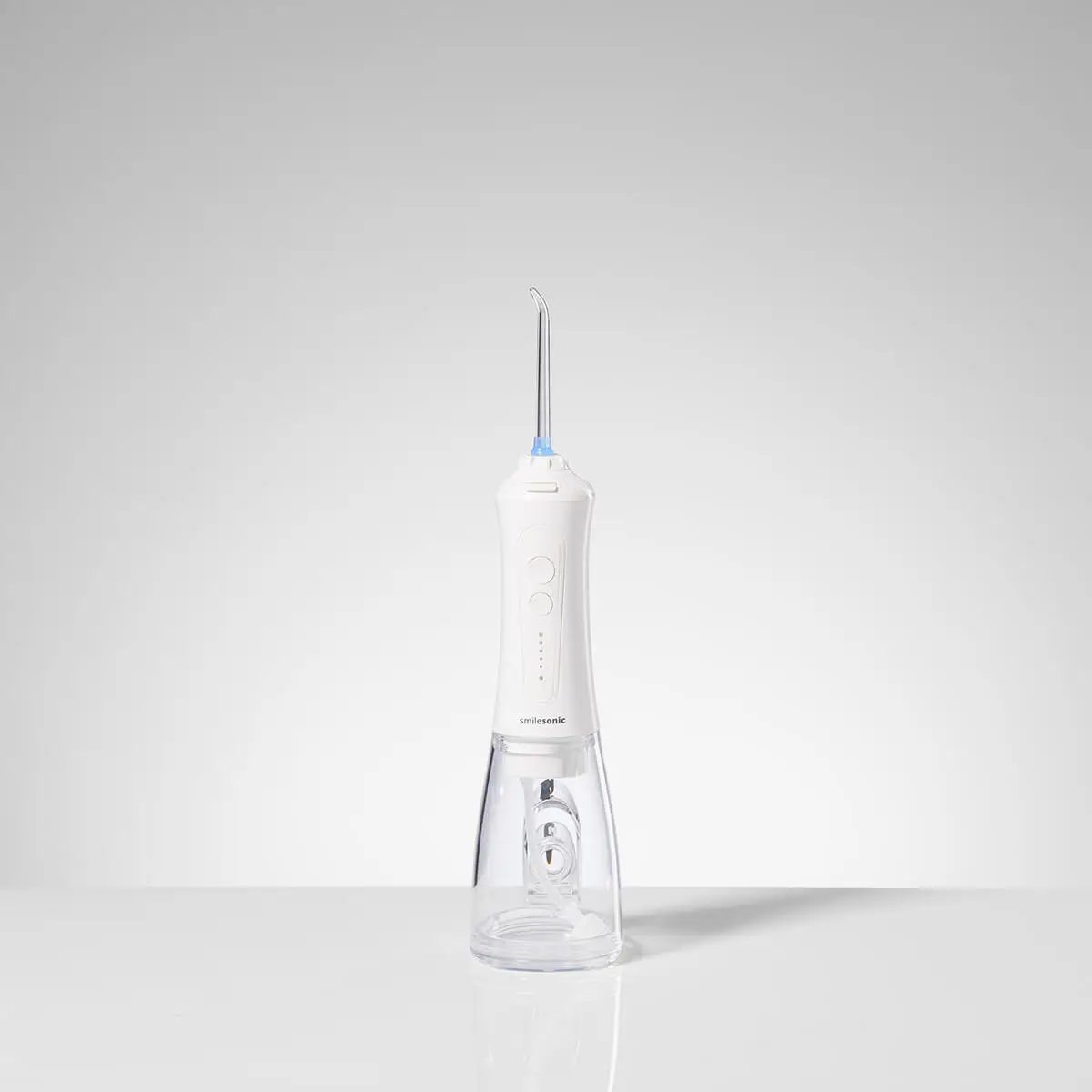
Example: Smilesonic AquaFlow – A Convenient Cordless Water Flosser
One popular dental water flosser model is the Smilesonic AquaFlow – a lightweight cordless irrigator designed for daily comfort and effectiveness. It features a large 300 ml water tank, 5 operating modes with wide pressure adjustment, and an ergonomic handle. Thanks to its compact design, it works well both at home and while traveling.
It is a good choice for people who want to supplement their daily oral hygiene routine with interdental cleaning without using dental floss. Its main advantages are ease of use and effective performance – just a few dozen seconds a day can significantly reduce the risk of gum disease and cavities on contact tooth surfaces.
Kiedy najlepiej czyścić przestrzenie międzyzębowe?
Najlepszym momentem na czyszczenie przestrzeni międzyzębowych jest wieczór (wystarczy raz dziennie). W zależności od wybranej metody, można zrobić to przed szczotkowaniem zębów lub też po nim. Jeśli sięgasz po nić dentystyczną albo szczoteczkę międzyzębową, lepiej wykonać ten krok przed myciem zębów – usunięte resztki zostaną wtedy dokładnie wypłukane przez pastę. Natomiast w przypadku irygatora nie ma jednej reguły – możesz go użyć zarówno przed myciem zębów, jak i po tej czynności, traktując to jako końcowy etap codziennej pielęgnacji.
Jak wprowadzić czyszczenie międzyzębowe do codziennej rutyny?
Dla wielu osób to nowe przyzwyczajenie, dlatego warto działać małymi krokami. Zacznij od kilku przestrzeni dziennie i stopniowo zwiększaj zakres. Wybierz metodę, która jest dla Ciebie najwygodniejsza – to zwiększy szansę, że będziesz jej używać regularnie. Możesz też ustawić przypomnienie w telefonie lub zostawić akcesoria do czyszczenia w widocznym miejscu w łazience. Kluczem nie jest perfekcja, ale regularność.
Podsumowanie
Czyszczenie przestrzeni międzyzębowych to nie dodatek, lecz nieodzowny element kompleksowej higieny jamy ustnej. Dzięki niemu można zapobiec próchnicy, chorobom dziąseł, odkładaniu się kamienia nazębnego oraz nieprzyjemnemu zapachowi z ust.
Niezależnie od tego, czy wybierzesz klasyczną nić dentystyczną, szczoteczkę międzyzębową, czy nowoczesny irygator – najważniejsze, byś robił to regularnie i z właściwą techniką. A jeśli zależy Ci na komforcie, skuteczności i delikatności – irygator, taki jak Smilesonic AquaFlow, może być rozwiązaniem idealnym na co dzień.
Zadbaj o swoje przestrzenie między zębami tak samo, jak o resztę jamy ustnej – bo właśnie tam zaczyna się prawdziwa higiena.