
Dental implants are one of the best and most durable solutions in modern dentistry. They allow you to restore not only full bite function but also the aesthetics of your smile – for many years, or even a lifetime. The condition? Proper oral hygiene. Because while implants themselves cannot get cavities, the surrounding tissues absolutely can.
That’s why people with implants need to take especially good care of their oral hygiene, and one of the key tools in this routine is a water flosser. But which model should you choose to ensure it is safe, effective, and convenient for daily use?
Why is a water flosser so important for implants?
Around every dental implant there are gums and bone – structures that are susceptible to inflammation, such as peri-implantitis, which is inflammation of the tissues surrounding an implant. If not detected and treated early, this condition can lead to implant loss.
The best way to prevent it is thorough daily cleaning of the areas around implants, especially those that a toothbrush cannot reach. This is where a water flosser comes in.
A water flosser flushes out bacteria and food debris from interdental spaces, gum pockets, and areas around implants. It is gentle on the gums while still being effective enough to provide real support in preventing periodontal diseases and implant-related complications.
What should a water flosser for implants have?
Not every model is suitable for people with implants. When choosing a water flosser, pay attention to several key features:
✅ Adjustable pressure
Too strong a water stream can irritate the gums, especially if implants were placed recently. Adjustable power settings are absolutely essential.
✅ Pulsing and gentle modes
A pulsating mode improves cleaning efficiency, while a gentle mode allows safe care of sensitive areas – particularly around newly healed implants.
✅ Specialized tips
It is ideal if the set includes orthodontic, standard, and narrow-jet tips. Each of them allows better access to different types of prosthetic work and hard-to-reach areas.
✅ Ease of use
A cordless, lightweight model that is easy to refill is a major advantage, especially if the water flosser is meant for daily use.
Smilesonic AquaFlow – implant-friendly water flosser
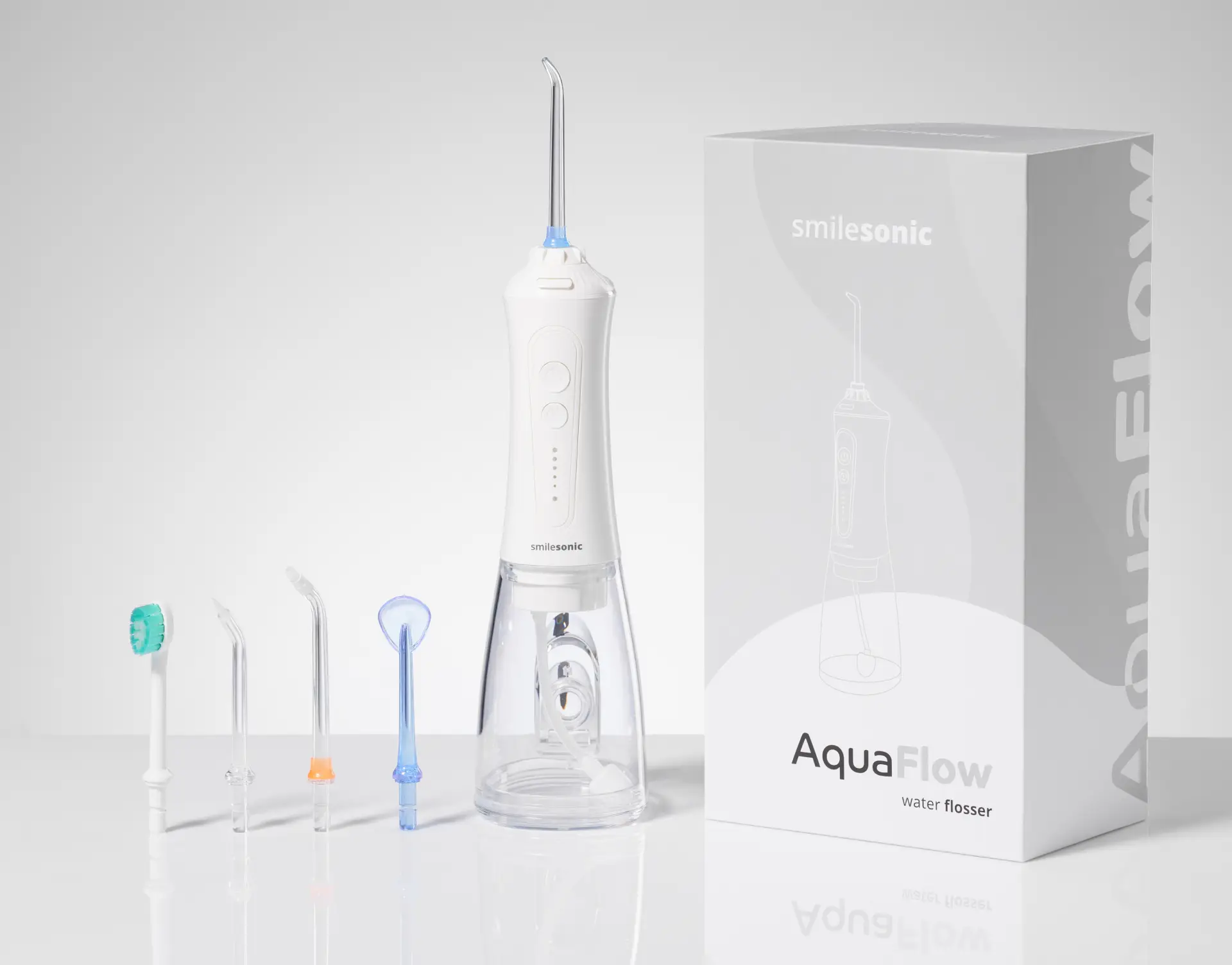
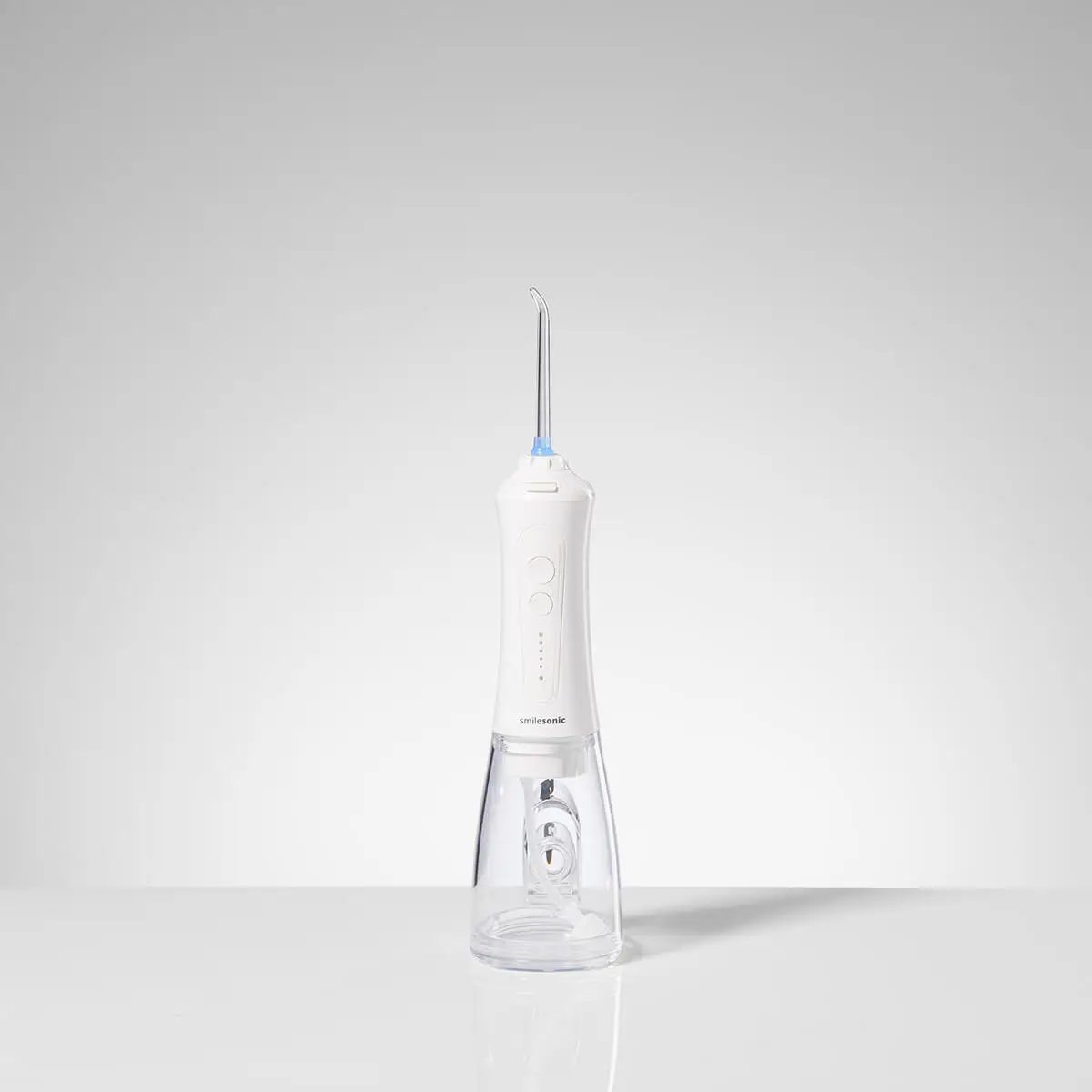
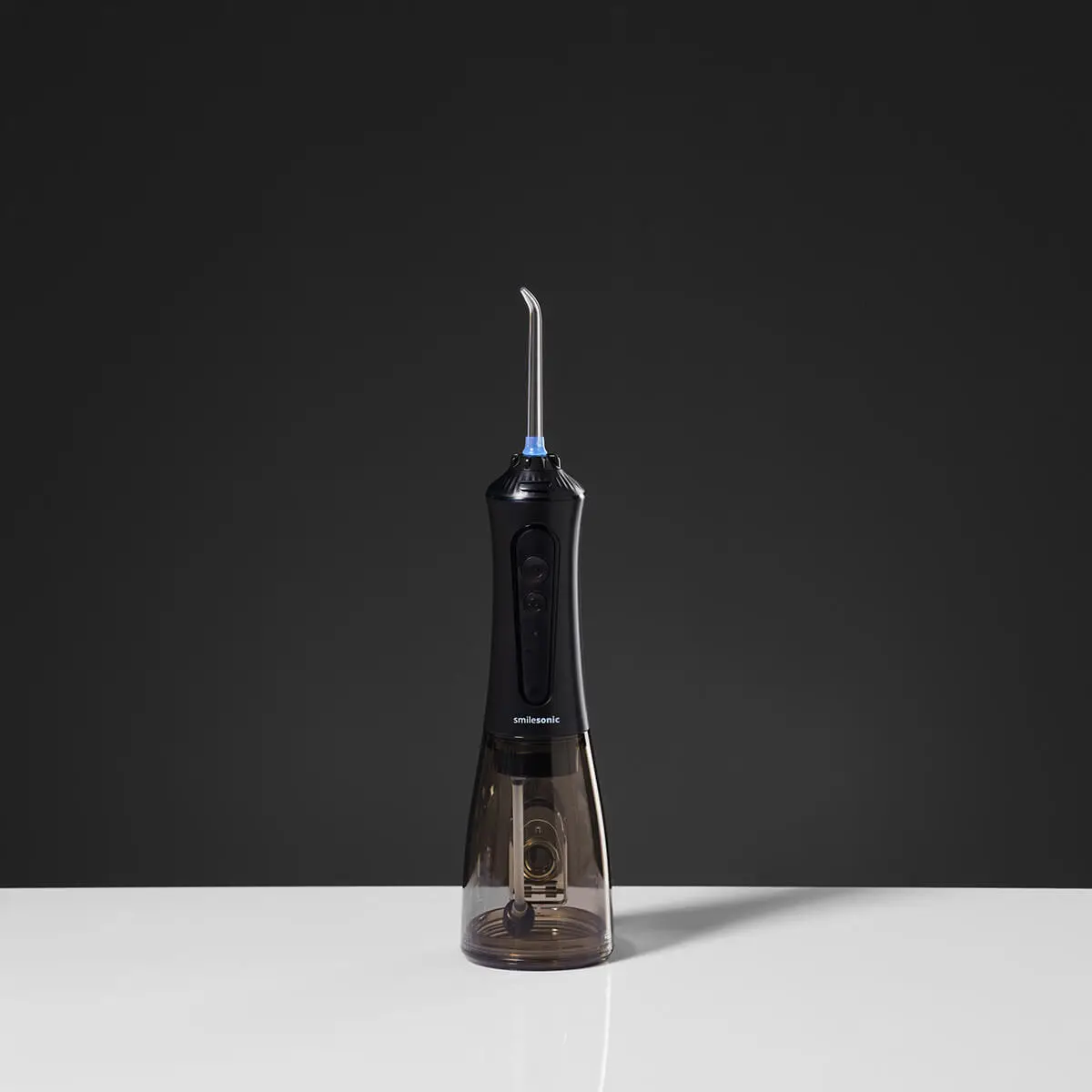
One of the models we recommend for home use – also for people with implants – is the Smilesonic AquaFlow. It is a cordless water flosser that combines modern technology with practical functionality.
Why is it worth it? Smilesonic AquaFlow is a cordless water flosser for daily oral hygiene, equipped with a 300 ml tank and 5 operating modes. It has sufficient pressure (2.75–7.6 bar) to effectively flush out food debris from interdental spaces and areas around implants or orthodontic appliances. The set includes five interchangeable tips, including a periodontal, orthodontic, and tongue-cleaning tip. The AquaFlow is lightweight, convenient, and waterproof. It is a good choice for those looking for something simple, solid, and portable.
Kiedy zacząć używać irygatora po wszczepieniu implantu?
Zwykle nie od razu. Po wszczepieniu implantu ważne jest, aby pozwolić dziąsłom i kości spokojnie się zagoić. Stosowanie irygatora należy wprowadzić dopiero po wyraźnym zaleceniu lekarza – zwykle po kilku dniach lub tygodniach, w zależności od zakresu zabiegu.
W pierwszym etapie często zaleca się:
-
- unikanie silnego strumienia wody,
- wybór trybu delikatnego,
- stosowanie letniej, czystej wody (bez płukanek),
- delikatne kierowanie strumienia przy linii dziąseł, a nie bezpośrednio w miejsce zabiegu.
Czy irygator wystarczy?
Irygator to nie wszystko. To świetne uzupełnienie codziennej higieny, ale nie może zastąpić szczotkowania zębów. Osoby z implantami powinny dbać o jamę ustną wieloetapowo.
-
- Szczotkowanie – najlepiej szczoteczką soniczną z miękkim włosiem.
- Irygacja – minimum raz dziennie, najlepiej po wieczornym szczotkowaniu.
- Płukanie – delikatne płyny do higieny jamy ustnej, bez alkoholu.
- Regularne wizyty kontrolne i higienizacja – co 3–6 miesięcy, by uniknąć powikłań wokół implantów.
Podsumowanie: jaki irygator do implantów zębowych?
Jeśli masz implanty, irygator to nie gadżet, ale realne wsparcie w utrzymaniu ich w świetnym stanie przez lata. Kluczowe jest, by wybrać model z możliwością regulacji ciśnienia,
z odpowiednimi końcówkami i trybami pracy.
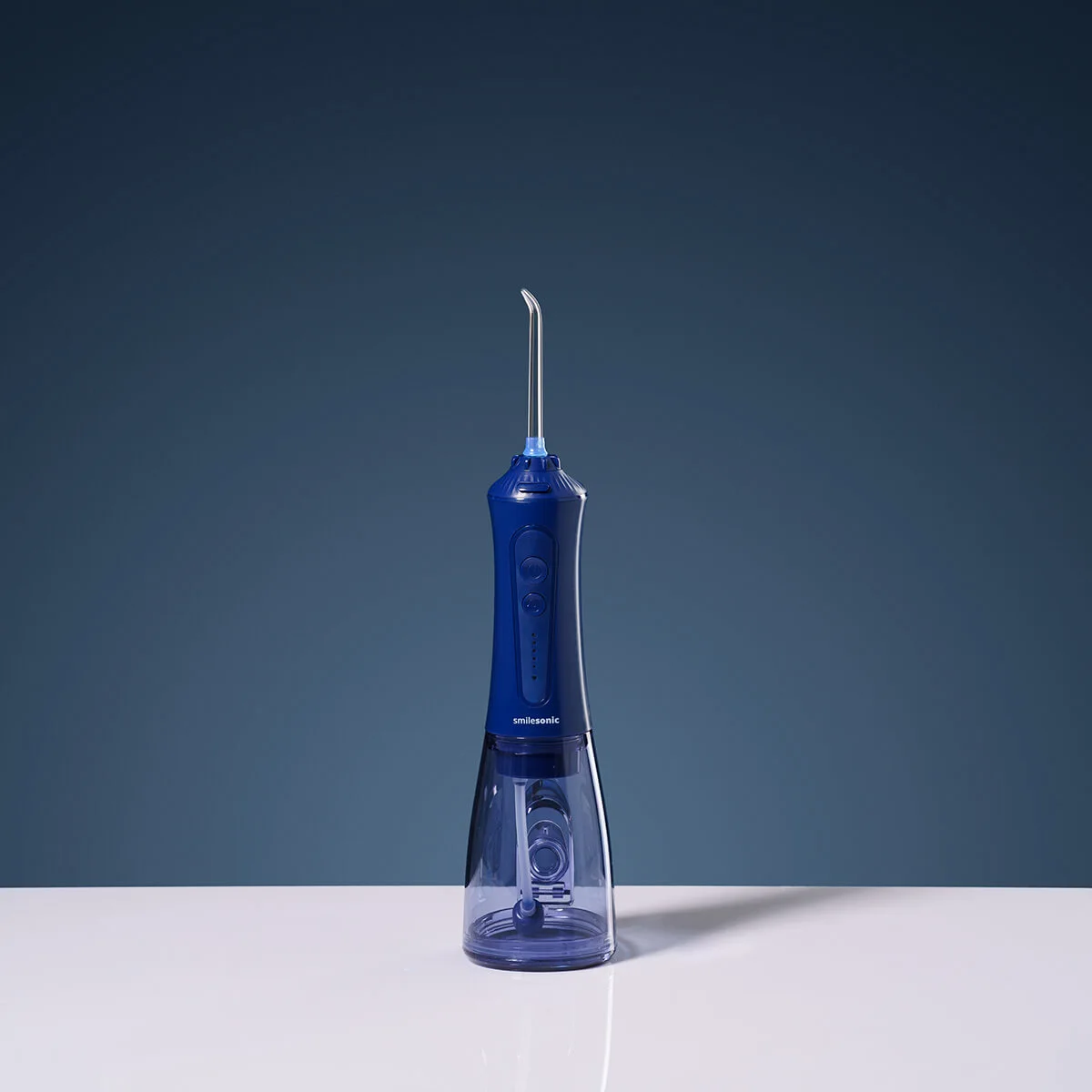
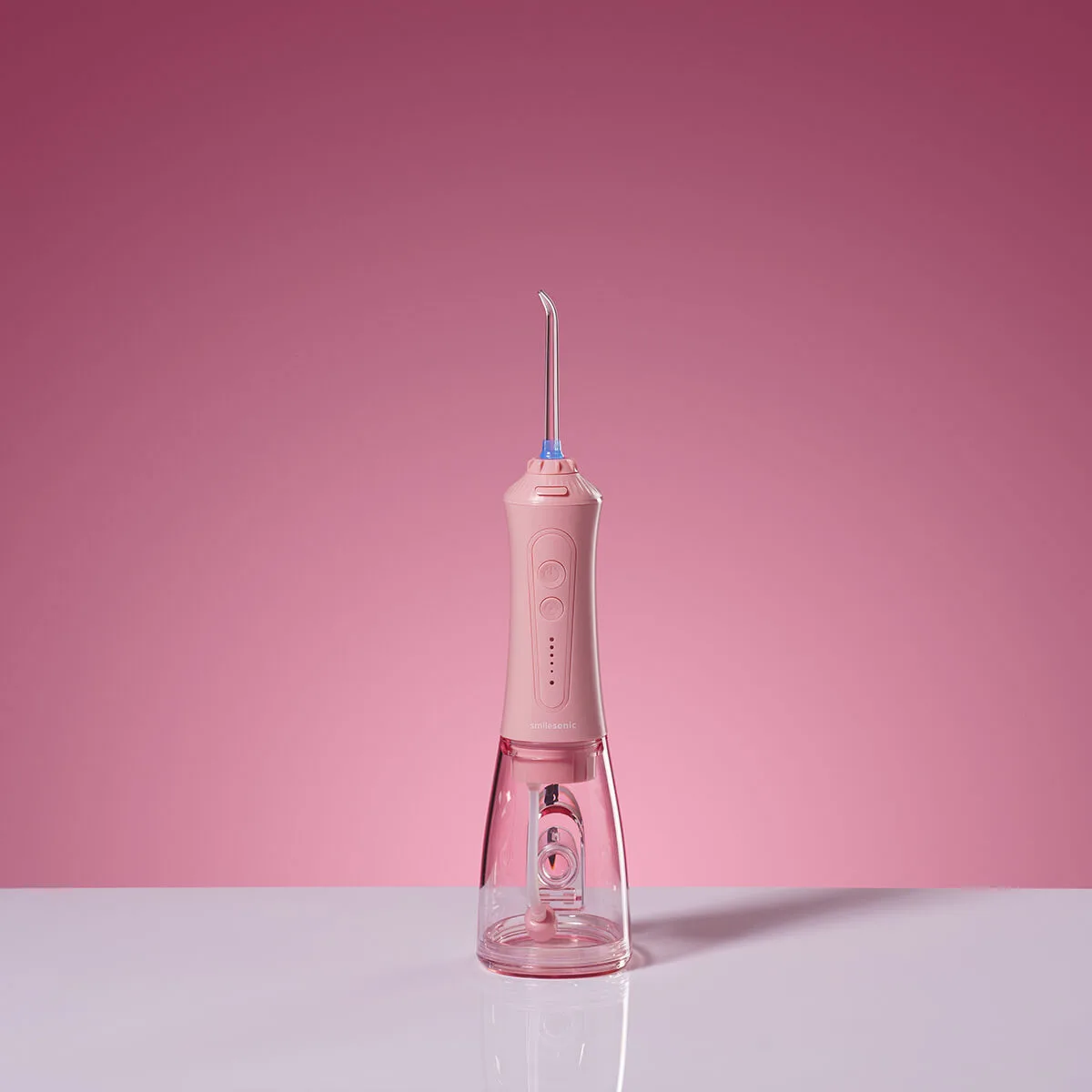
Smilesonic AquaFlow to przykład irygatora, który spełnia te wszystkie wymagania – jest skuteczny, wygodny i bezpieczny dla osób z implantami. Niezależnie od tego, czy dopiero co zakończyłeś leczenie, czy chcesz zadbać o swoje uzupełnienia po latach – warto wprowadzić irygator do codziennej rutyny.
To mały krok, który może zrobić ogromną różnicę dla zdrowia Twoich dziąseł oraz implantów.