
In short:
Artificial intelligence (AI) is increasingly supporting dental diagnostics—it analyzes X-rays and 3D images, detects cavities, assists in implant treatment planning, and simplifies documentation. In many cases, AI can identify changes earlier than humans. For patients, this means faster and more accurate treatment; for dentists, better decision-making and time savings.
Artificial intelligence – a new standard in dental practices?
Just a few years ago, AI in dentistry sounded like science fiction. Today, tools based on machine learning and deep neural networks are used in real practices: they support image analysis, automate medical documentation, assist in treatment planning, and improve communication with patients.
Modern software can analyze radiographs with an accuracy of 90–95%, detecting cavities, resorption, inflammation, fractures, and bite abnormalities—all within a fraction of a second.
How does AI support dentists in practice?
1. Radiological diagnostics and cavity detection
This is currently the most widely used application. AI analyzes X-rays or CBCT scans and highlights suspicious areas that require the dentist’s attention—even when the changes are barely visible. This allows for earlier intervention before pain or visible damage occurs.
2. Implant and orthodontic treatment planning
AI can automatically estimate bone volume and density, analyze anatomical structures, and suggest optimal implant placement. In orthodontics, it supports aligner design, bite assessment, and prediction of treatment outcomes.
3. Documentation automation
AI-powered software can transcribe notes, automatically describe images, and even manage electronic patient records. This saves time for the dental team and reduces the risk of errors.
4. Patient communication and digital assistants
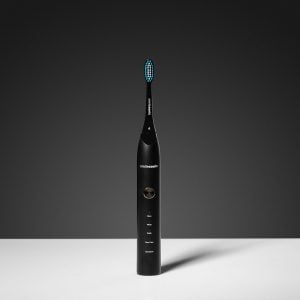
AI-based systems can send appointment reminders, conduct e-consultations, answer frequently asked questions, and support customer service. When integrated with e-commerce platforms, they can also personalize product recommendations—for example, suggesting toothbrush heads.
What about ethics and trust?
The use of AI in medicine—including dentistry—raises questions about responsibility and trust. Can AI make mistakes? Of course. However, it operates differently than humans: it does not get tired or overlook details due to fatigue or routine. The best results come from combining both worlds—human experience and technological precision.
It is important to emphasize that AI does not replace the dentist but serves as a decision-support tool. The final diagnosis and treatment plan are always determined by the dentist, based on their knowledge, intuition, and clinical context.
Benefits of using AI – summary
✔️ Faster diagnostics and early disease detection
✔️ Greater precision in treatment and planning
✔️ Fewer errors and less subjective judgment
✔️ Time savings for dentists and their teams
✔️ Improved patient communication and greater trust
✔️ Support in documentation and data analysis
Will AI become the standard in every clinic?
Very likely—yes. Advances in technology, greater equipment availability, and decreasing implementation costs mean that AI is no longer a luxury but is becoming the standard. Clinics that adopt it gain not only efficiency but also the image of modern and responsible healthcare providers.
FAQ - Najczęściej zadawane pytania
Can artificial intelligence detect cavities?
Yes, AI analyzes X-rays and can identify cavities even at an early stage. In some cases, its effectiveness matches or even exceeds human diagnosis.
Can AI replace a dentist?
No, AI supports the dentist but does not make decisions independently. The final diagnosis and treatment plan are always made by the dentist.
What are the applications of AI in a dental office?
AI supports image analysis, implant planning, documentation management, and patient communication. It also helps identify issues such as periapical lesions or malocclusion.
Is AI in dentistry safe?
Yes, AI systems are based on large datasets and are tested for effectiveness. Their results are always verified by a dentist, ensuring patient safety.
Does every dental clinic use AI?
No, but more and more modern practices are adopting AI-based solutions. This trend is growing rapidly, especially in diagnostics and treatment planning.
Can AI help patients at home?
Yes, some mobile apps and sonic toothbrushes use AI to analyze brushing technique or send reminders about dental visits. It’s a convenient solution that supports prevention and daily oral hygiene.