
In short:
Many patients still fear that anesthesia at the dentist will be painful. In reality, modern dentistry offers safe, effective, and nearly painless methods of numbing—from traditional injections to computer-assisted anesthesia. Fear of the needle should not be a barrier to dental treatment, and a good dentist can tailor the type of anesthesia to the patient’s needs and sensitivity.
Does dental anesthesia really hurt?
Many patients associate anesthesia with pain—but in reality, the discomfort is not caused by the anesthetic itself, but by the fear of the needle prick, often rooted in childhood or past unpleasant experiences.
Modern techniques and methods allow this discomfort to be almost completely eliminated. In most cases, patients feel only a slight pinch—comparable to a mosquito bite—that lasts just a second. Moreover, many clinics use topical gels or sprays before injection to numb the injection site.
Types of dental anesthesia
1. Topical anesthesia
Usually in the form of a gel, cream, or spray applied to the mucosa before the actual injection.
- Ideal for children and patients afraid of needles
- Reduces or completely eliminates pain from the injection
2. Infiltration anesthesia
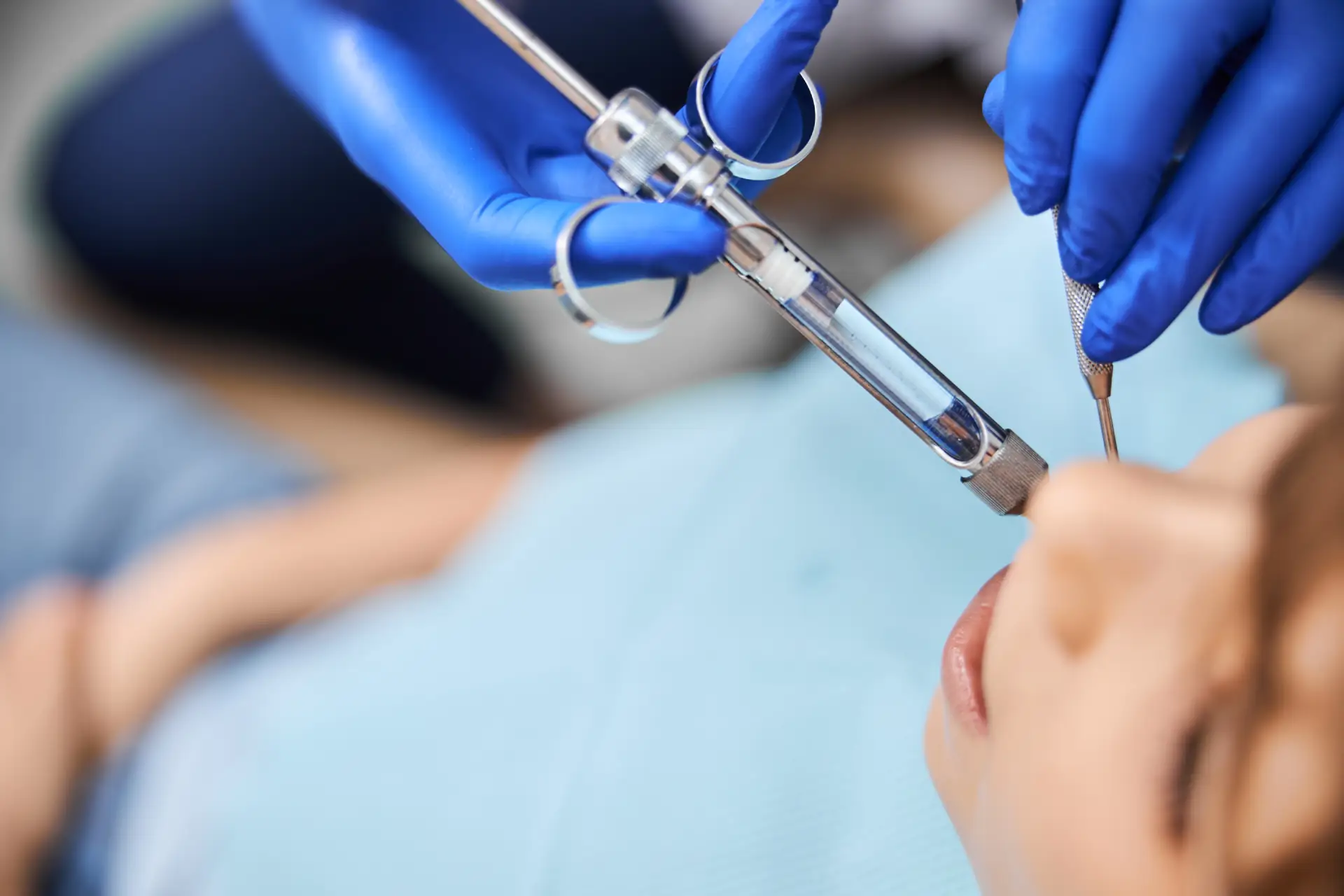
The most common type used in treating cavities, tooth extractions, and root canal treatment.
- The anesthetic is injected under the mucosa near the tooth root
- Fast and effective
- Lasts about 1–2 hours
3. Nerve block anesthesia
Most often used for lower molars, where the bone is thicker and more difficult for the anesthetic to penetrate.
- Blocks the nerve responsible for pain in a specific area
- Provides deep and long-lasting numbness
4. Intraligamentary and intrapulpal anesthesia
Used in special cases, such as when other methods are insufficient or ineffective.
- Acts very locally
- Often used as a supplement to other techniques
5. Computer-assisted anesthesia (The Wand, SleeperOne, etc.)
A modern technology in which the anesthetic is delivered very slowly and precisely using a microprocessor-controlled device.
- Virtually painless—no traditional syringe sensation
- Especially recommended for children and patients with dental anxiety
- Often described as feeling like a “pen-like touch” rather than an injection
Duration and safety of anesthesia
W większości przypadków znieczulenie działa od kilku minut do dwóch godzin, w zależności od roIn most cases, anesthesia lasts from a few minutes up to two hours, depending on the type of anesthetic and procedure.
Modern anesthetics are:
- safe
- well tolerated
- associated with a very low risk of side effects
In rare cases, allergic reactions may occur, which is why the dentist always conducts a detailed medical history before treatment.
When is anesthesia not used?
Although anesthesia is safe and routinely used, there are situations where it may not be necessary:
- minor preventive procedures (e.g., scaling, fluoride treatment)
- very small, non-sensitive cavities
- when a patient consciously chooses not to use it (e.g., personal preference or time constraints)
However, it is important to remember: you should never endure dental pain unnecessarily—anesthesia is your ally.
Summary
Dental anesthesia does not have to hurt—and in most cases, it does not. Modern technology, properly selected medications, and an individualized approach make dental treatment much more comfortable than many people expect.
Do not fear anesthesia—fear not having it when it is truly needed.
FAQ – Frequently Asked Questions About Dental Anesthesia
Does dental anesthesia hurt?
Modern dental anesthesia is virtually painless. Most patients feel only a slight pinch that lasts a second.
How long does dental anesthesia last?
It usually lasts between 30 minutes and 2 hours, depending on the type of anesthetic and procedure.
Can you be allergic to dental anesthesia?
Yes, but allergic reactions are very rare. That’s why the dentist always takes a detailed medical history before treatment.
How is computer-assisted anesthesia different from traditional anesthesia?
Computer-assisted anesthesia is delivered very slowly and precisely using a microprocessor-controlled device, making the injection almost imperceptible.
Can children receive dental anesthesia?
Yes, children commonly receive topical or computer-assisted anesthesia, which are safe and adapted to their sensitivity.
Can you drive after dental anesthesia?
In most cases, yes—local anesthesia does not affect driving ability. The exception is when sedatives or sedation are used.