
Veneers have become one of the most popular aesthetic procedures in modern dentistry. They allow for a rapid transformation of a smile: whitening teeth, correcting their shape, closing gaps, and improving minor imperfections. With veneers, it is possible to achieve a “Hollywood smile” without long orthodontic treatment or repeated whitening procedures. However, as their popularity grows, so do concerns – do veneers damage natural teeth? Is this procedure reversible and safe, or something that should be avoided?
In this article, we address common myths, explain the technical aspects of the procedure, and help clarify for whom veneers are a good option and when it may be better to postpone treatment.
What are veneers?
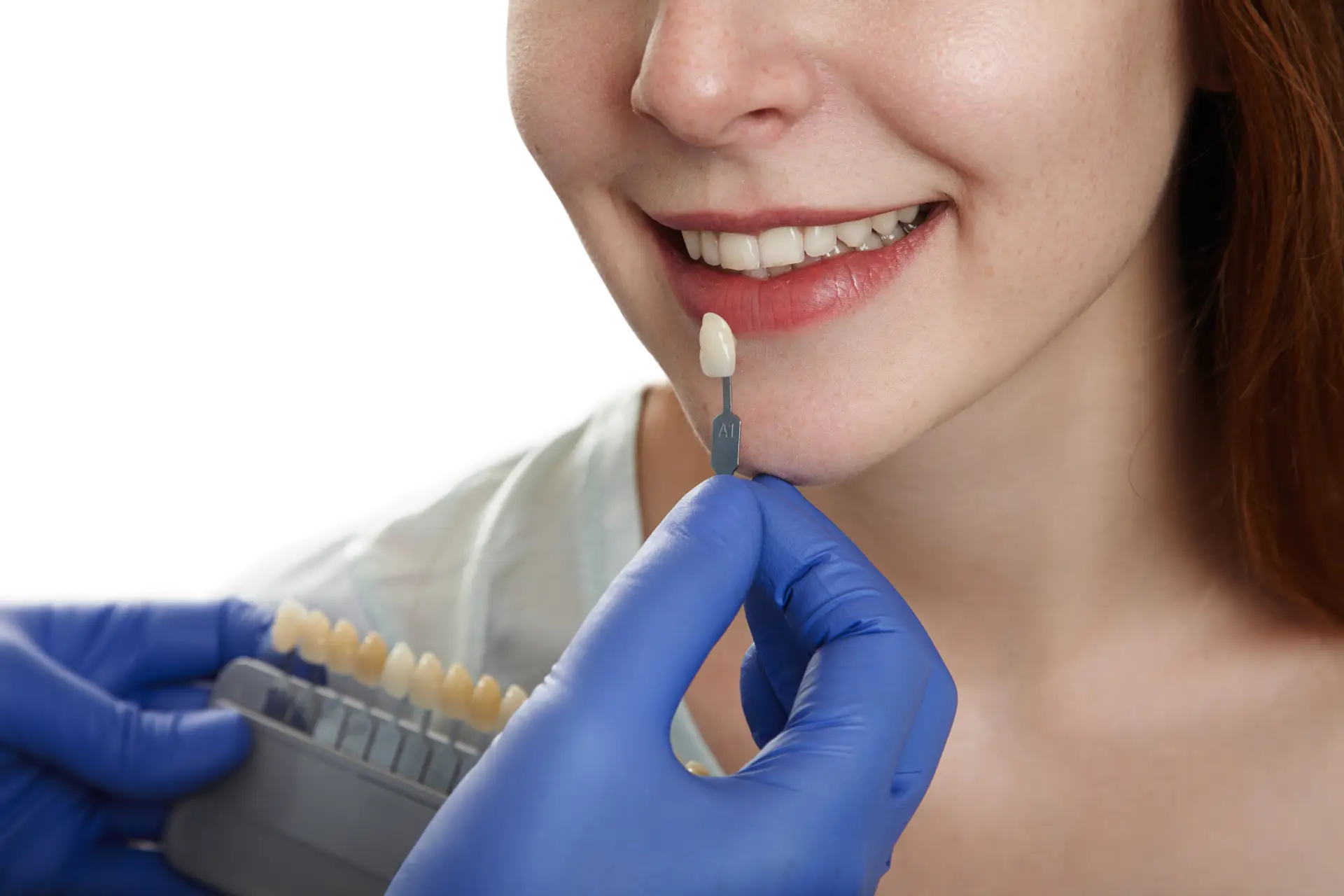
Veneers are thin shells – most commonly made of porcelain or composite – that are bonded to the front (labial) surface of the teeth. Their thickness is usually around 0.2–0.5 mm.
With veneers, it is possible to:
- lighten discoloured teeth,
- hide irregularities or cracks,
- improve tooth length or shape,
- close a diastema (gap between teeth),
- align the smile without orthodontic braces.
Do veneers require tooth preparation?
It depends on the type of veneers and the patient’s initial dental condition.
Traditional porcelain veneers
In most cases, they require minimal tooth preparation, meaning gentle removal of a thin layer of enamel. This is mainly done to ensure the veneer does not protrude and looks natural within the dental arch.
The procedure is very precise: typically only 0.2–0.3 mm of enamel is removed. Importantly, the dental pulp (the “nerve”) is not affected.
No-prep or minimal-prep veneers
These are ultra-thin veneers (e.g. Lumineers) that do not require tooth reduction or require it only minimally. They are bonded without significant interference with the tooth structure, although they are not always suitable—especially if teeth are large, protruded, or severely misaligned.
Do veneers damage enamel?
It is true that in most cases veneers require the removal of a thin layer of enamel. This is an irreversible modification of the natural tooth structure—once enamel is removed, it does not regenerate.
However, it cannot be said that veneers “damage” teeth. When performed by an experienced dentist, the tooth itself is not destroyed. Dentin is not removed, and the pulp chamber is not opened, meaning the tooth remains alive and functional.
When can veneers be risky?
Although the procedure itself is generally safe, there are situations where veneers may not be recommended or require extra caution:
- teeth grinding (bruxism) – may damage veneers and increase the risk of debonding,
- severely worn teeth – insufficient enamel surface for bonding,
- malocclusion – orthodontic issues should be addressed first,
- teeth with large fillings or non-vital teeth – crowns may be more appropriate,
- very young patients – enamel is thinner and jaw growth may affect results.
In such cases, thorough diagnosis and individual assessment are essential.
How to care for teeth with veneers
Although veneers are durable, they require proper maintenance. Their lifespan can reach 10–15 years, depending on lifestyle and oral hygiene.
Care guidelines:
- brush teeth twice daily with a soft-bristled toothbrush,
- use dental floss or an irrigator,
- avoid biting nails or opening bottles with teeth,
- limit staining products (coffee, red wine), especially with composite veneers,
- visit your dentist and hygienist regularly.
€106.00Select options This product has multiple variants. The options may be chosen on the product page
€77.00Select options This product has multiple variants. The options may be chosen on the product page
€68.00Select options This product has multiple variants. The options may be chosen on the product page
€67.00Select options This product has multiple variants. The options may be chosen on the product page
Licówki a psychologia – czyli o realnych korzyściach
Zaskakująco często pacjenci, którzy decydują się na licówki, doświadczają pozytywnych zmian nie tylko w wyglądzie, ale i w samopoczuciu. Lepszy uśmiech to większa pewność siebie, otwartość społeczna, chęć uśmiechania się, a niekiedy nawet lepsze relacje zawodowe i prywatne.
Nie oznacza to, że licówki są dla każdego, lecz w dobrze dobranych przypadkach mogą mieć wpływ na komfort życia i samoocenę. Warto jednak pamiętać, że to zabieg estetyczny – nie leczy próchnicy, nie poprawia zgryzu oraz nie zastępuje higieny jamy ustnej.
Podsumowanie – licówki to nie zło, ale wymagają rozsądku
Czy licówki niszczą zęby? Nie – jeśli są prawidłowo założone. Choć zabieg wiąże się z ingerencją w szkliwo, jest to proces minimalny, kontrolowany i wykonywany zgodnie ze standardami współczesnej stomatologii. To nie zabieg destrukcyjny, lecz estetyczny. Mimo tego wymaga odpowiednich wskazań, planu leczenia oraz zaufanego lekarza.
Licówki nie są dla każdego. Ale jeśli Twoje zęby są zdrowe, a Ty marzysz o zmianie ich wyglądu – jest to bezpieczna i trwała metoda metamorfozy uśmiechu. Klucz tkwi w dobrej diagnostyce, indywidualnym podejściu i… zdrowym rozsądku.