

- How does a sonic toothbrush work?
- Are there any contraindications to using a sonic toothbrush?
- Advanced periodontitis and exposed tooth necks
- Tooth sensitivity
- Oral herpes, thrush, and mouth ulcers
- Baby teeth and orthodontic appliances in children
- Fresh fillings, veneers, and dental restorations
- Limited motor control — for example in elderly or disabled individuals
- Inner ear disorders or hypersensitivity to sound and vibrations
- Can a sonic toothbrush be harmful?
- Summary: Sonic toothbrushes are excellent — but not always and not for everyone
Sonic toothbrushes have become extremely popular among people who care about their oral health. Their effectiveness, gentle action, and innovative technology make them a common choice for both dentists and patients. However, like any device, they are not completely universal. There are certain situations and medical conditions in which using a sonic toothbrush may be inadvisable or may require consultation with a dentist.
In the following article, we explain exactly who should be cautious when using a sonic toothbrush, when it may be necessary to temporarily stop using one, and what to pay attention to in specific oral health conditions.
How does a sonic toothbrush work?
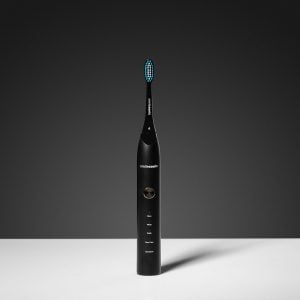
First, it is worth understanding what a sonic toothbrush actually is. It is an electric device that generates high-frequency vibrations (up to 96,000 movements per minute), which are transferred to the bristles of the brush head. When combined with toothpaste and saliva, this creates a cavitation effect — a dynamic fluid movement that helps remove bacterial plaque even from hard-to-reach areas. This technology is highly effective and — when used properly — exceptionally safe.
Are there any contraindications to using a sonic toothbrush?
Although sonic toothbrushes are generally considered gentler than rotary electric toothbrushes, not everyone should use them without restrictions. There are situations in which special caution is required or temporary discontinuation is recommended.
Immediately after oral surgery
After tooth extractions, dental implant placement, sinus lift procedures, or periodontal surgeries (such as curettage), extra care is necessary. Even though sonic brush movements are gentle, they may interfere with wound healing or irritate stitches.
Recommendation: During the first few days after surgery, use only a very soft manual toothbrush and return to a sonic toothbrush only after consulting your dentist.
Advanced periodontitis and exposed tooth necks
Although sonic toothbrushes are often recommended for gum problems, people with advanced periodontal disease — including deep gum pockets, bleeding, or loose teeth — should consult a dentist before using one. Excessive vibration may aggravate tissue damage or cause discomfort.
Recommendation: Use only the sensitive-gum mode with a soft brush head after approval from a periodontist.
Tooth sensitivity
Sensitive teeth react painfully to cold, heat, touch, and sometimes even brushing itself. Although modern sonic toothbrushes offer gentle modes, people with severe sensitivity may still experience discomfort from the vibrations.
Recommendation: Choose a model with a gentle mode and ultra-soft bristles. If pain persists, temporarily switch back to a manual toothbrush and consult your dentist.
Oral herpes, thrush, and mouth ulcers
Inflammation, erosions, and lesions of the oral mucosa are situations in which mechanical irritation should be minimized. Even gentle brushing may cause pain, prolong healing, or spread the herpes virus to other areas.
Recommendation: Use a soft manual toothbrush and thoroughly disinfect or replace the sonic brush head once the lesions have healed.
Baby teeth and orthodontic appliances in children
For very young children (under 3 years old), sonic toothbrushes are generally not recommended unless specifically designed for that age group. This is especially important for children wearing braces, where incorrect brushing technique may cause injuries.
Recommendation: Use only age-appropriate children’s models and supervise brushing.
Fresh fillings, veneers, and dental restorations
After receiving fillings, crowns, bridges, or veneers, it is advisable to wait several days before returning to a sonic toothbrush. In rare cases, pulsating movements may weaken freshly cured composite materials.
Recommendation: Ask your dentist when you can safely resume using a sonic toothbrush. Usually, a break of 2–5 days is sufficient.
Limited motor control — for example in elderly or disabled individuals
Although sonic toothbrushes are convenient and often recommended for seniors, people with limited manual dexterity may have difficulty guiding the brush properly, increasing the risk of gum injury.
Recommendation: Choose a toothbrush with a large handle, soft bristles, and adjustable intensity levels. Assistance from a caregiver and regular oral health monitoring are also important.
Inner ear disorders or hypersensitivity to sound and vibrations
This is a rare but important contraindication. In people with balance disorders, vertigo, tinnitus, or neurological hypersensitivity, the vibrations emitted by a sonic toothbrush may feel unpleasant or even trigger neurological discomfort or balance disturbances.
Recommendation: Try the device at the lowest power setting and consult a doctor if any neurological symptoms occur.
Can a sonic toothbrush be harmful?
When used correctly — no. A sonic toothbrush cannot “wear away enamel” or mechanically damage teeth. In most cases, it is a safe and effective tool for daily oral hygiene. However, like any device, it may not be suitable for everyone or in every situation.
That is why it is important to remember:
- do not force yourself to use it if it causes discomfort;
- if you have gum disease, sensitive teeth, or recently underwent dental surgery, consult your dentist;
- regularly replace brush heads and maintain proper device hygiene (such as drying it after use and never sharing it with others).
Summary: Sonic toothbrushes are excellent — but not always and not for everyone
Today, sonic toothbrushes are among the most effective tools for maintaining oral hygiene. They help fight dental plaque, support gum health, and contribute to cleaner, whiter teeth. However, like any solution, they also have limitations.
They are not recommended immediately after oral procedures, during acute oral inflammation, for very young children, or in certain neurological conditions and cases of hypersensitivity. Sometimes only a temporary break or a different brushing technique is needed, but the most important thing is to listen to your body and consult your dentist whenever in doubt.uchać swojego ciała i konsultować się z dentystą w razie wątpliwości.