
- How does a dental water flosser work?
- Water flosser before or after brushing? What does dentistry say?
- What do studies show?
- The best scenario? An integrated oral care routine
- The most common mistakes when using a water flosser
- Does the water flosser model matter?
- Podsumowanie: irygator – przed czy po myciu zębów?
A dental water flosser — also known as a water pick — is becoming increasingly common in modern bathrooms. It is designed to clean interdental spaces and areas below the gumline using a thin, pulsating stream of water. It is effective, convenient, and gentle. But one question comes up again and again: should you use it before or after brushing your teeth?
The answer is not as obvious as it may seem. In this article, we explain:
- how a water flosser works and what exactly it cleans,
- what experts and scientific studies say about the correct order,
- what the ideal oral hygiene routine looks like,
- and which mistakes to avoid so you do not reduce the benefits of irrigation.
How does a dental water flosser work?
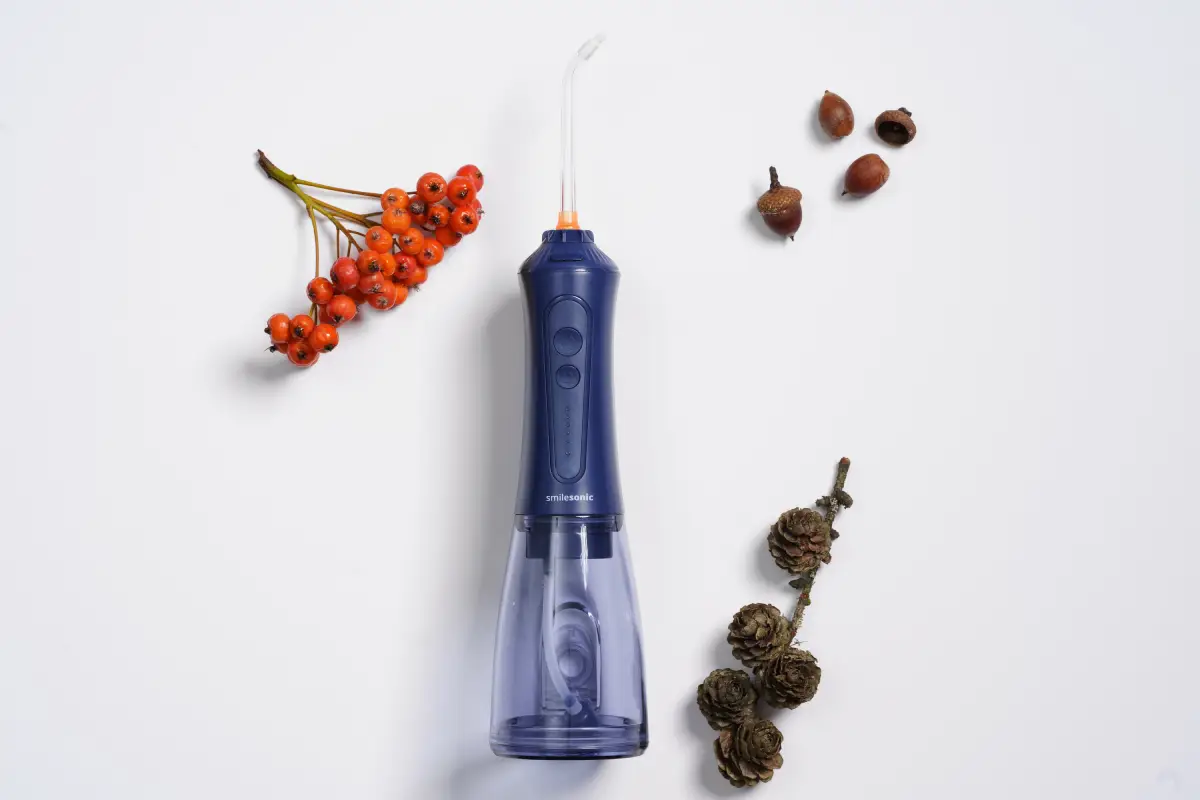
A water flosser is a device that releases a thin, pulsating stream of water under pressure, which:
- flushes out food debris,
- reduces biofilm and dental plaque,
- reaches areas a toothbrush or dental floss cannot access,
- massages the gums and improves blood circulation.
Unlike a toothbrush, a water flosser does not mechanically scrub plaque away — its main purpose is rinsing rather than brushing. That is exactly why the timing of use matters so much: before or after brushing.
Water flosser before or after brushing? What does dentistry say?
Arguments for using a water flosser before brushing
- better access to plaque — the water flosser removes larger food particles and opens interdental spaces, making brushing more effective;
- lower risk of washing away toothpaste ingredients — when used after brushing, the flosser may rinse away active ingredients such as fluoride too quickly;
- improved feeling of cleanliness — finishing with brushing leaves a fresher sensation and completes the hygiene routine.
Arguments for using a water flosser after brushing
- additional cleaning — it removes leftover toothpaste and debris missed by the toothbrush;
- improved biofilm removal — once teeth are already brushed, the water stream can better penetrate gum pockets and interdental areas;
- manufacturer recommendations — some brands, such as Waterpik and Philips, suggest using the water flosser as the final step.
What do studies show?
Research conducted by the American Dental Association (ADA) showed that water flossers effectively reduce plaque and improve gum health regardless of when they are used — as long as they are used daily.
Other studies suggest that the best results are achieved when the water flosser is used after brushing because the teeth have already been cleaned of most plaque, allowing the water stream to focus on interdental spaces and the gumline.
The best scenario? An integrated oral care routine
Want a simple and effective routine? Here is a proven approach:
- Start with the water flosser — especially if there is a lot of food debris in your mouth or if you wear braces. Rinse thoroughly before brushing.
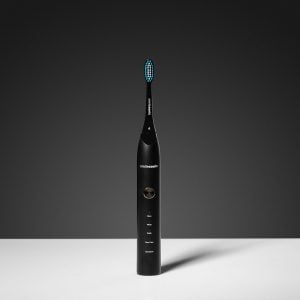
- Brush your teeth — preferably with a sonic or electric toothbrush for at least 2 minutes, using fluoride toothpaste.
- Use the water flosser again — this time as the final step to flush away remaining debris and clean hard-to-reach areas.
- Optional: mouthwash — if you use a mouth rinse, apply it at the very end.
Only use a water flosser once a day? In that case, it is best to use it after brushing your teeth, as this tends to provide the greatest effectiveness.
The most common mistakes when using a water flosser
Here are the mistakes people make most often:
- starting with water pressure that is too high — begin with a gentle setting, especially if you have sensitive gums;
- inconsistent use — results only appear with daily use;
- poor technique — do not aim the stream directly into the gums; instead, guide it along the gumline at a slight angle;
- rinsing away toothpaste too quickly — this is why it may be beneficial to wait at least several minutes after brushing before using the flosser (if used once daily), or to use enzyme-based or fluoride-free toothpaste beforehand.
Does the water flosser model matter?
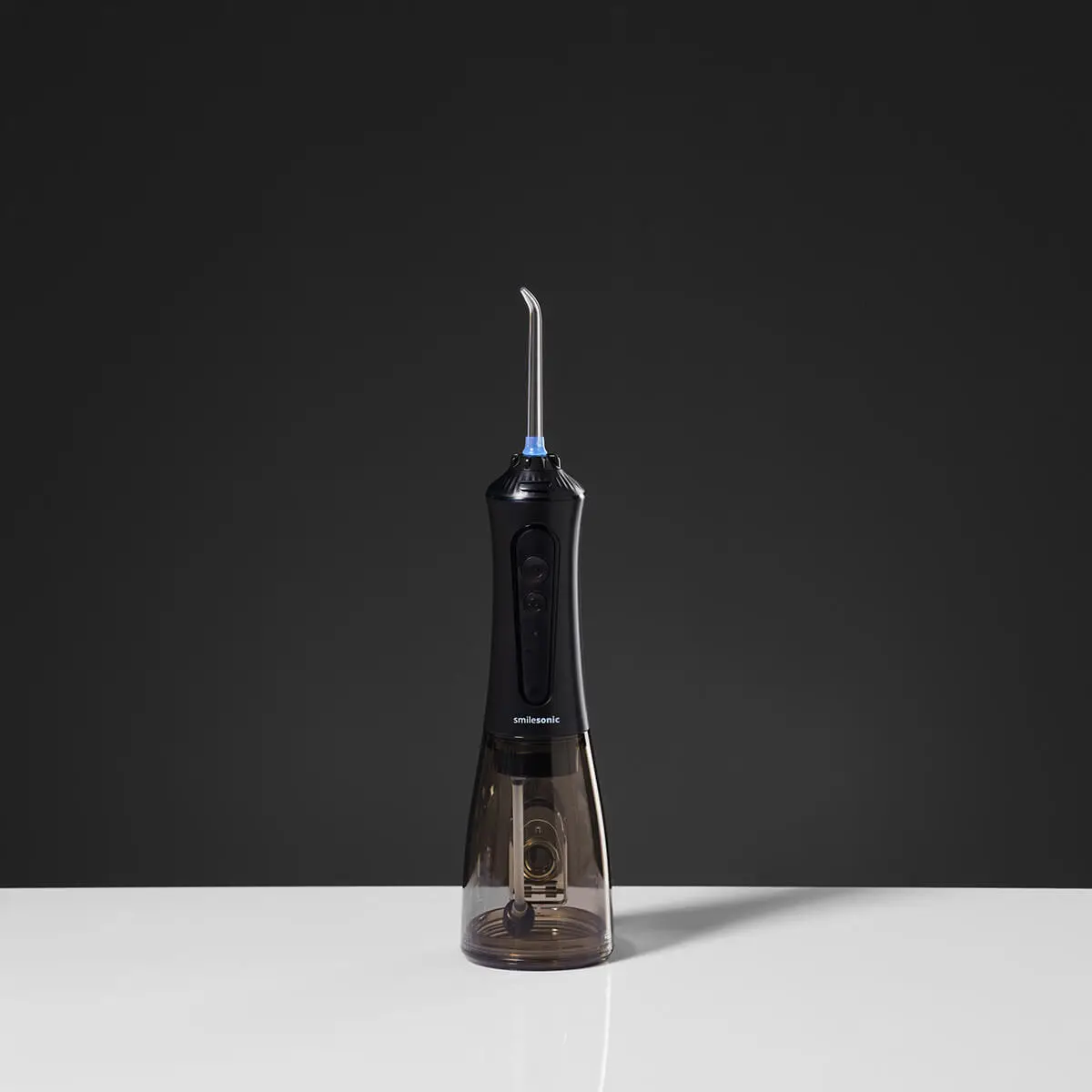
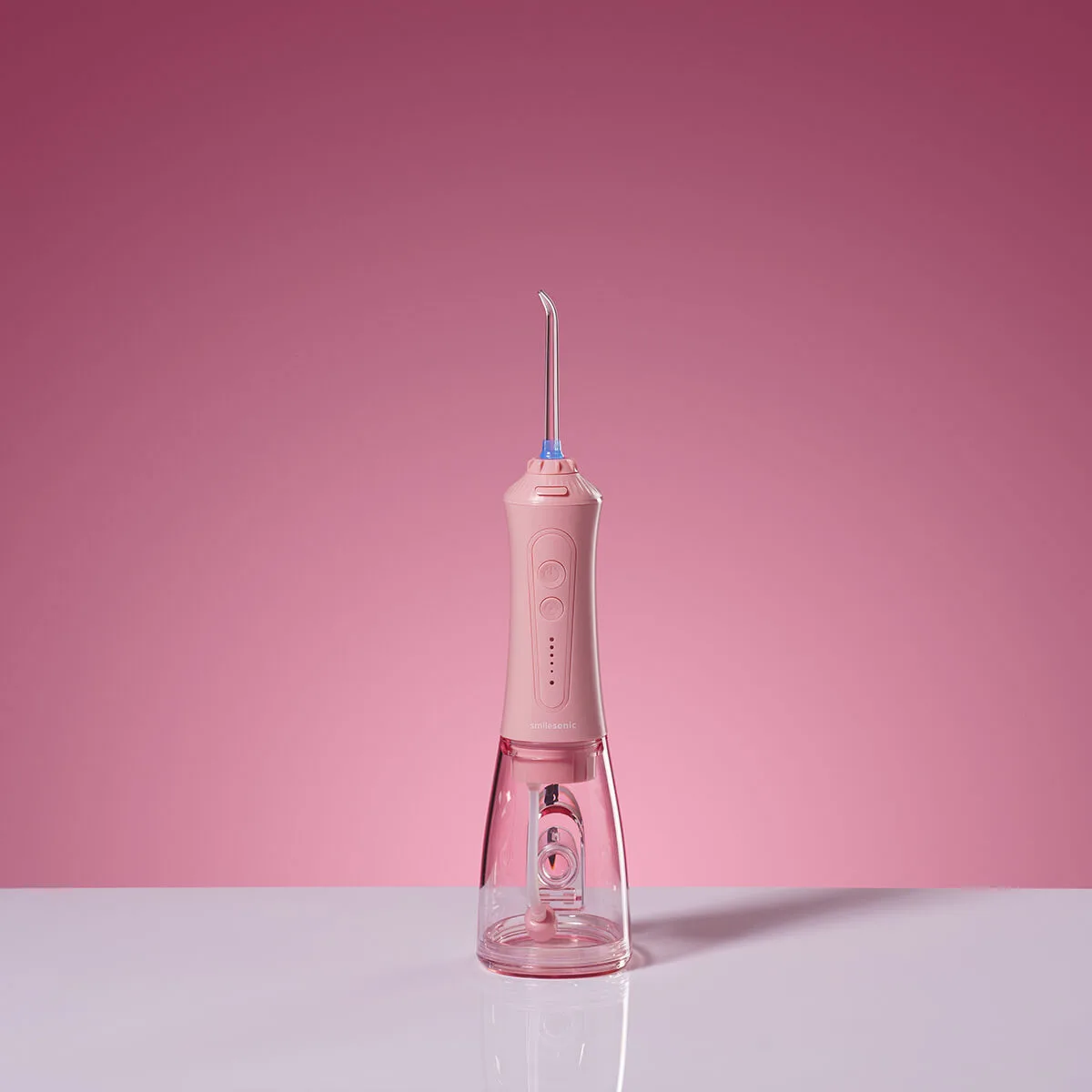
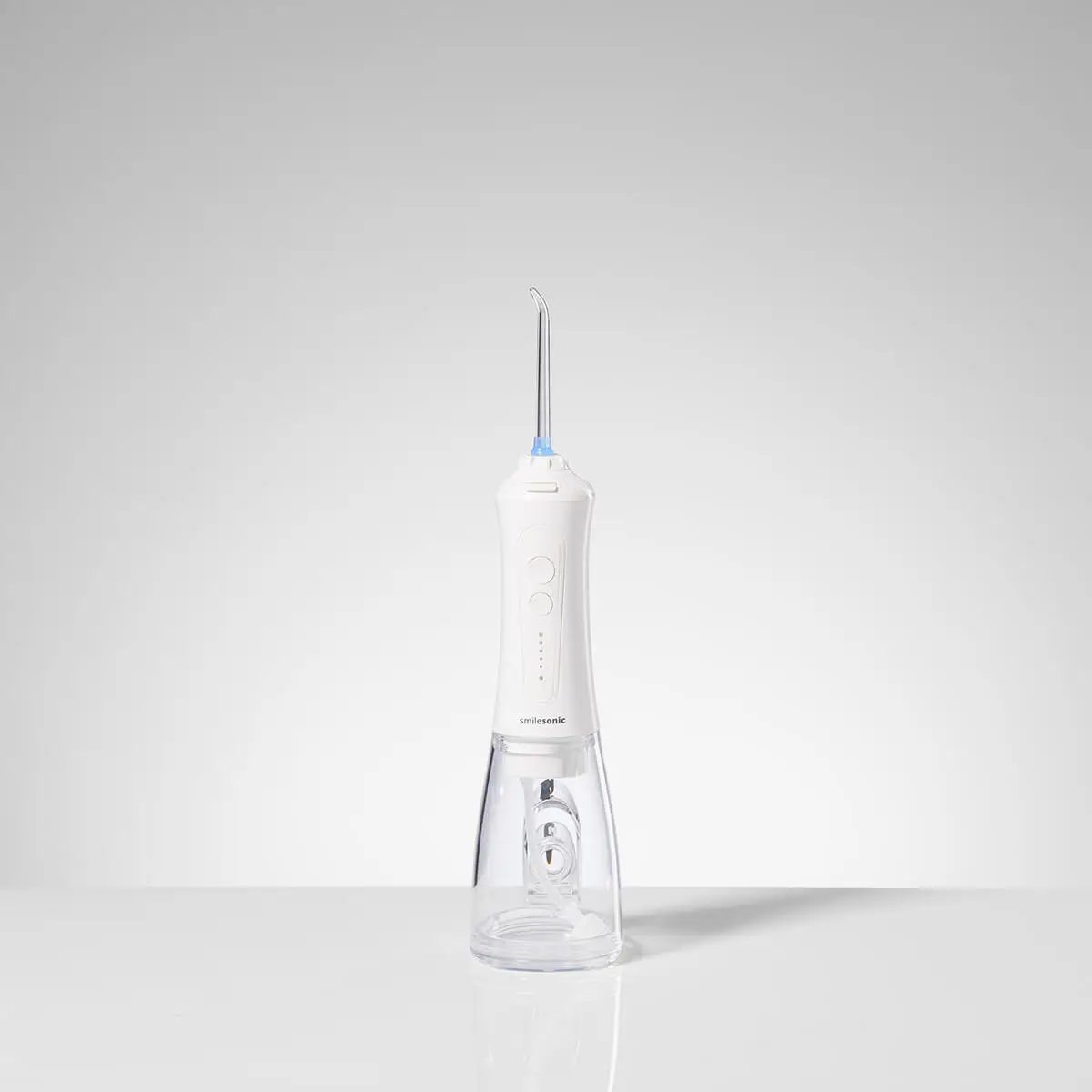
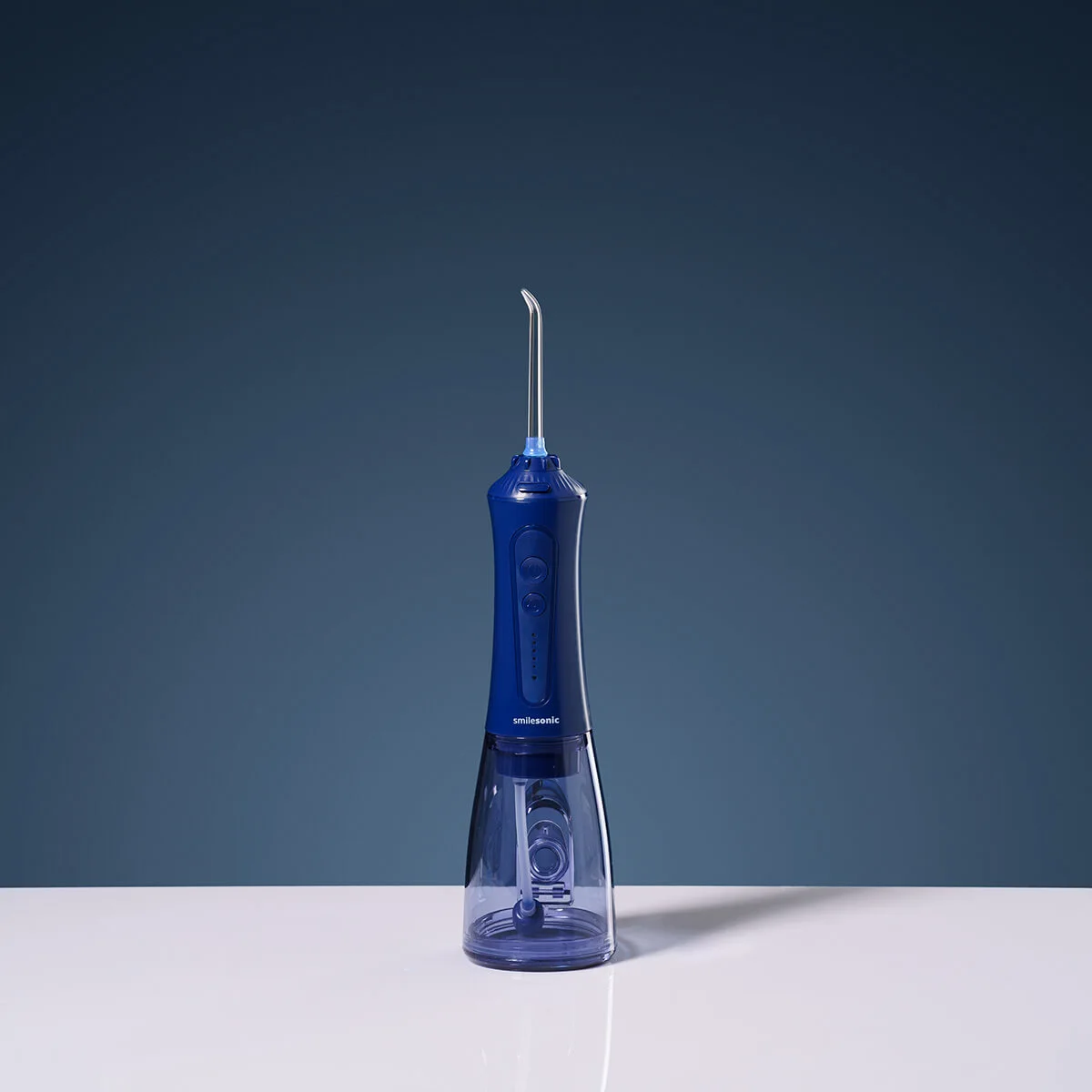
Yes — quite a lot. Not all water flossers are equally effective. It is worth choosing a device with a pulsation function (not just a continuous stream) and adjustable pressure settings. Models such as the Smilesonic AquaFlow offer multiple intensity modes and various tips, allowing you to customize the cleaning experience to your needs.
Additionally, if the water flosser is comfortable and easy to use, it becomes much easier to build a consistent habit — and consistency is the true key to success.
Podsumowanie: irygator – przed czy po myciu zębów?
Nie ma na to jednej słusznej odpowiedzi. Najlepsze efekty daje używanie irygatora po szczotkowaniu – wtedy skuteczniej usuwa on resztki pasty i doczyszcza przestrzenie międzyzębowe. Ale jeśli w Twojej jamie ustnej zalega dużo resztek pokarmowych lub nosisz aparat ortodontyczny, możesz zacząć od irygacji, a potem przejść do mycia zębów.
Najważniejsze: używaj go codziennie, z właściwą techniką i ciśnieniem dopasowanym do swoich dziąseł.
Pamiętaj – irygator to nie gadżet. To jedno z najskuteczniejszych narzędzi, jakie masz do dyspozycji, aby utrzymać zdrowe dziąsła, świeży oddech oraz zminimalizować ryzyko chorób przyzębia.