

In brief:
Fluoride varnish treatment is a safe and quick preventive procedure that involves applying a fluoride-based preparation to the surface of the enamel. It is recommended when enamel is weakened, for people at increased risk of tooth decay, or after orthodontic treatment. The procedure is suitable for children, teenagers, and adults—especially when risk factors are present or when you want to enhance the effects of daily oral hygiene.
What is fluoride varnish treatment?
Fluoride varnishing is a procedure performed in a dental office that involves applying a thin layer of a high-quality varnish containing fluoride or other remineralizing agents to the surface of the teeth.
The preparation creates a protective layer that:
- increases enamel resistance to acids and bacteria,
- supports remineralization,
- may help reduce tooth sensitivity.
The procedure usually takes just a few minutes and does not require anesthesia.
What does the procedure look like?
- The dentist or hygienist first cleans the tooth surfaces—removing plaque and, if necessary, tartar.
- The teeth are then thoroughly dried and isolated to prevent the varnish from being washed away.
- The varnish is applied in a thin layer using a brush or syringe. The patient is usually asked to avoid eating and drinking for 30–60 minutes.
- After the procedure, the patient receives care instructions—typically to avoid staining drinks, hard foods, and to maintain proper oral hygiene.
When is it worth getting fluoride varnish?
The procedure is particularly recommended:
- for children and teenagers shortly after permanent teeth erupt—when enamel is still immature and more prone to decay,
- for individuals at high risk of cavities (e.g., due to systemic conditions, poor hygiene, or frequent sugar intake),
- after orthodontic treatment (especially fixed braces),
- for adults with weakened enamel (e.g., due to erosion, gum recession, or lifestyle factors),
- as support for daily oral hygiene routines.
Who is it for?
The treatment is suitable for both children and adults, provided there is no untreated advanced tooth decay or severe enamel damage.
People who should especially consider it include:
- orthodontic patients,
- individuals with gum recession,
- those with insufficient oral hygiene,
- people genetically predisposed to cavities.
A consultation with a dentist is recommended to determine whether the procedure is appropriate.
How often should you get it?
Frequency depends on age and caries risk:
- children and teenagers: every 3–6 months,
- adults: 1–2 times per year.
The exact schedule should be determined by a dentist during check-ups.
Fluoride varnish vs. daily hygiene
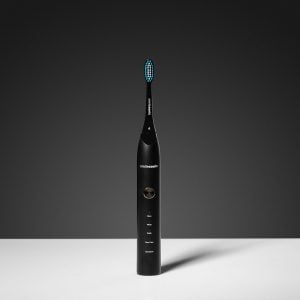
Fluoride varnishing does not replace daily oral care—it complements it. The best results are achieved when combined with regular and effective brushing, ideally with a sonic toothbrush that helps remove plaque from hard-to-reach areas.
Are there any side effects?
The procedure is safe, but like any dental treatment, it has some contraindications—such as allergy to the product’s ingredients or active oral infections.
After the procedure:
- avoid milk temporarily, as it may interfere with fluoride action.
- avoid hard foods for several hours,
FAQ – Frequently Asked Questions
Does fluoride varnish treatment hurt?
No, it is completely painless. The varnish is applied with a brush or applicator, and patients do not feel discomfort.
Do you need to avoid eating after the procedure?
Yes. For at least 2 hours, avoid eating and drinking (except water), and for about 12 hours avoid hard foods. This helps the varnish stay on the teeth longer.
Does it work immediately?
The effects are not instant but begin fairly quickly. Enamel strengthening and increased resistance to decay develop over several days.
Does a sonic toothbrush remove the varnish?
No, if used as recommended. However, it’s best to wait about 24 hours before resuming regular brushing to avoid removing the protective layer.
Who should get fluoride varnish regularly?
Children, teenagers, people with sensitive teeth, orthodontic patients, and those at higher risk of cavities. It’s a valuable investment in long-term enamel protection.