
In brief:
Oral leukoplakia is a change in the mucous membrane that appears as white patches or thickened areas in the mouth. It most commonly occurs on the tongue, gums, or the inside of the cheeks. Although in many cases the lesion is benign, it requires dental evaluation because in some situations it may be a precancerous condition. Early diagnosis and elimination of risk factors help limit disease progression.
What is oral leukoplakia?
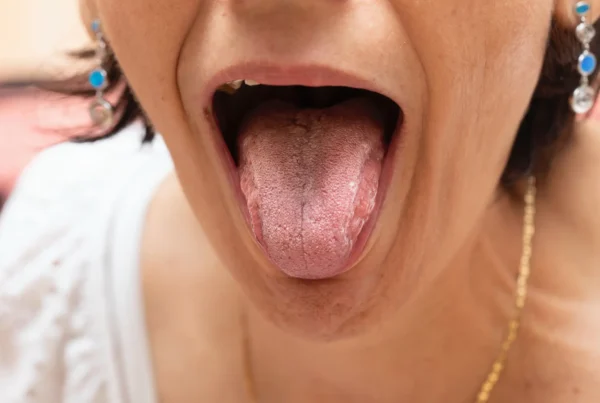
Leukoplakia is a lesion of the oral mucosa that appears as white, often slightly thickened patches. They cannot be easily removed by rubbing or scraping, which distinguishes them from some other oral changes, such as bacterial coating.
These lesions can occur in various locations, but most often appear on:
- the tongue,
- the gums,
- the inside of the cheeks,
- the palate,
- the floor of the mouth.
Leukoplakia is not a disease itself, but rather a symptom of changes occurring in the mucosa that may have different causes.
Common causes of leukoplakia
The exact cause of leukoplakia is not always clear, but doctors point to several factors that may increase the risk of developing these lesions.
The most common include:
- smoking,
- chronic irritation of the mucosa,
- excessive alcohol consumption,
- ill-fitting dentures,
- damage caused by sharp tooth edges,
- deficiencies of certain vitamins.
In many cases, lesions develop as a result of long-term irritation of the oral mucosa.ypadkach zmiany rozwijają się w wyniku długotrwałego podrażniania błony śluzowej jamy ustnej.
Symptoms of oral leukoplakia
The most characteristic symptom of leukoplakia is the presence of white patches or thickened areas on the oral mucosa. They can vary in size and shape. Typical symptoms include:
- white or grayish lesions on the mucosa,
- thickening of the lesion surface,
- a rough or irregular texture,
- inability to remove the lesion by rubbing.
In many cases, leukoplakia does not cause pain, which is why it is often noticed only during a routine dental check-up.
Is leukoplakia dangerous?
Most leukoplakia lesions are benign, but in some cases they may transform into cancerous changes. Therefore, any lesion in the oral mucosa that persists for a long time should be evaluated by a doctor.
A dentist or specialist may decide to:
- monitor the lesion,
- perform additional tests,
- take a biopsy for histopathological examination.
Regular monitoring allows early detection of potential abnormalities.ci.
What does treatment of leukoplakia look like?
Treatment of leukoplakia primarily depends on the cause of the lesions. In many cases, the first step is to eliminate factors that irritate the mucosa.
This may include:
- quitting smoking,
- reducing alcohol consumption,
- adjusting dental prosthetics,
- treating sharp tooth edges.
If the lesion does not resolve or raises concern, it may be surgically removed or undergo further diagnostic evaluation.b budzi podejrzenia lekarza, może zostać usunięta chirurgicznie lub poddana dalszej diagnostyce.
Why is oral hygiene important?
Although leukoplakia is not always directly caused by poor oral hygiene, good dental care helps reduce mucosal irritation and bacterial growth.
Daily oral hygiene should include:
- regular tooth brushing,
- cleaning interdental spaces,
- cleaning the tongue,
- regular dental check-ups.
Proper oral hygiene helps maintain healthy mucosa and reduce the risk of various lesions.i ograniczyć rozwój różnych zmian.
When should you see a doctor?
Not every white patch in the mouth indicates leukoplakia, but any lesion that persists for a longer time should be consulted with a specialist.
You should see a doctor if:
- the lesion does not disappear after a few weeks,
- the patch increases in size,
- the lesion changes color or texture,
- pain or bleeding occurs.
Early diagnosis increases the chances of effective treatment and helps avoid more serious health problems.a uniknąć poważniejszych problemów zdrowotnych.
FAQ - Najczęściej zadawane pytania
Does oral leukoplakia hurt?
In most cases, leukoplakia does not cause pain. The lesions are often asymptomatic and may be noticed accidentally during daily oral care or a dental visit.
Is leukoplakia cancer?
Leukoplakia is not cancer, but in some cases it may be a precancerous condition. Therefore, any suspicious lesion should be examined by a doctor.
Can leukoplakia disappear on its own?
If the cause is mucosal irritation, the lesion may shrink or disappear after removing the irritant. However, in many cases medical observation is still necessary.
Does smoking increase the risk of leukoplakia?
Yes. Tobacco use is one of the most commonly identified risk factors for leukoplakia in the oral cavity.
Can leukoplakia be prevented?
Reducing the risk mainly involves avoiding smoking, limiting alcohol consumption, maintaining proper oral hygiene, and attending regular dental check-ups.