

In brief:
HPV (Human Papillomavirus) is one of the most common viruses transmitted between people. Although it is most often associated with genital infections, it can also occur in the oral cavity and throat. Oral HPV may cause various changes in the mucous membranes, including papillomas or small growths. Early diagnosis, appropriate treatment, and prevention help reduce the risk of complications.
What is HPV?
HPV, or Human Papillomavirus, is a group of over 200 different virus types. Some of them can cause benign skin or mucosal lesions, while others are associated with a higher risk of cancer.
HPV infection is very common—many people experience it during their lifetime without even realizing it. In many cases, the immune system clears the virus on its own.
However, sometimes the infection can persist and cause various types of changes in the mucous membranes.
HPV in the mouth – how does infection occur?
HPV in the mouth usually occurs as a result of the virus coming into contact with the mucous membrane. Infection can occur through direct contact with an infected person.
The virus can enter the body particularly when there are minor lesions on the mucous membrane in the mouth, e.g.:
- micro-injuries on the tongue,
- irritated gums,
- damage caused by sharp edges on the teeth,
- sores caused by brushing your teeth.
However, not every infection leads to the appearance of visible symptoms.
Symptoms of oral HPV
Symptoms of HPV infection in the oral cavity can vary and often depend on the virus type. In many cases, the infection remains asymptomatic for a long time.
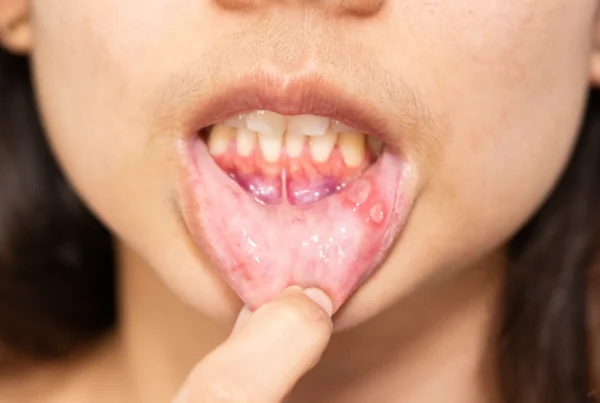
If changes appear, they may take the form of:
small lumps or growths on the mucous membrane,
oral warts,
lesions on the tongue or palate,
slight thickening or small bumps.
One example is a papilloma on the tongue—a small, soft lump resembling a wart. Such a lesion is usually benign but should be examined by a doctor or dentist.odna, jednak powinna zostać skontrolowana przez lekarza lub stomatologa.
HPV in the throat – does it cause symptoms?
HPV can also occur in the throat. In such cases, symptoms may be less noticeable than in the oral cavity.
Possible symptoms include:
- a feeling of discomfort in the throat,
- difficulty swallowing,
- hoarseness lasting for a long time,
- small growths in the throat area.
If symptoms persist, it is always advisable to consult a doctor.
What does HPV diagnosis in the oral cavity look like?
Diagnosis of HPV-related changes usually begins with an examination of the oral cavity by a doctor or dentist. The specialist evaluates the appearance and location of the lesions.
In some cases, it may be necessary to:
- perform additional tests,
- take a tissue sample for histopathological examination,
- carry out tests to detect the presence of the virus.
This allows for an accurate determination of the nature of the lesion and selection of the appropriate treatment method.
Treatment of HPV-related lesions
The method of treatment depends on the type and size of the lesions. In many cases, small lesions can be removed in a medical office.
Common methods include:
- surgical removal,
- laser removal,
- cryotherapy (freezing the lesion),
- pharmacological treatment.
After removal, the doctor may recommend follow-up visits to check for recurrence.ntrolne wizyty, aby sprawdzić, czy nie pojawiają się nowe zmiany.
Prevention of HPV infection
Although it is not possible to completely eliminate the risk of HPV infection, there are ways to significantly reduce it.
The most important preventive measures include:
- maintaining good oral hygiene,
- regular dental check-ups,
- avoiding irritation of the mucous membranes,
- strengthening the immune system.
An important element of prevention is also vaccination against selected types of HPV, which can protect against certain infections.
Why is it important to monitor changes in the oral cavity?
Regular observation of the oral cavity makes it easier to notice any abnormalities early. If changes appear and do not disappear after a few weeks, it is advisable to consult a specialist.
Early detection of oral health problems increases the chances of effective treatment and helps avoid more serious complications.
FAQ - Najczęściej zadawane pytania
Is oral HPV dangerous?
In many cases, HPV infection does not cause serious symptoms and may resolve on its own. However, some types of the virus are associated with a higher risk of disease, so any suspicious lesion should be checked by a doctor.
Does a papilloma on the tongue always mean HPV?
Not always. A papilloma on the tongue may be associated with HPV infection, but similar lesions can have other causes. That’s why consultation with a specialist is important.
Can oral HPV be cured?
HPV can be cleared by the body’s immune system. If lesions appear in the oral cavity, a doctor may remove them or apply appropriate treatment.
Does HPV in the throat cause symptoms?
Sometimes HPV infection in the throat does not produce clear symptoms. In other cases, it may cause hoarseness, a sensation of something stuck in the throat, or difficulty swallowing.
How can the risk of HPV infection be reduced?
Prevention includes maintaining good oral hygiene, regular dental check-ups, and vaccination against selected types of HPV.