
In brief:
Black hairy tongue is a harmless but alarming-looking change in the oral cavity, involving excessive elongation of the papillae on the tongue and their discoloration. It is most often caused by poor hygiene, diet, or substances being consumed. The good news is that in most cases it can be effectively treated by changing habits and maintaining proper oral care.
What is black hairy tongue?
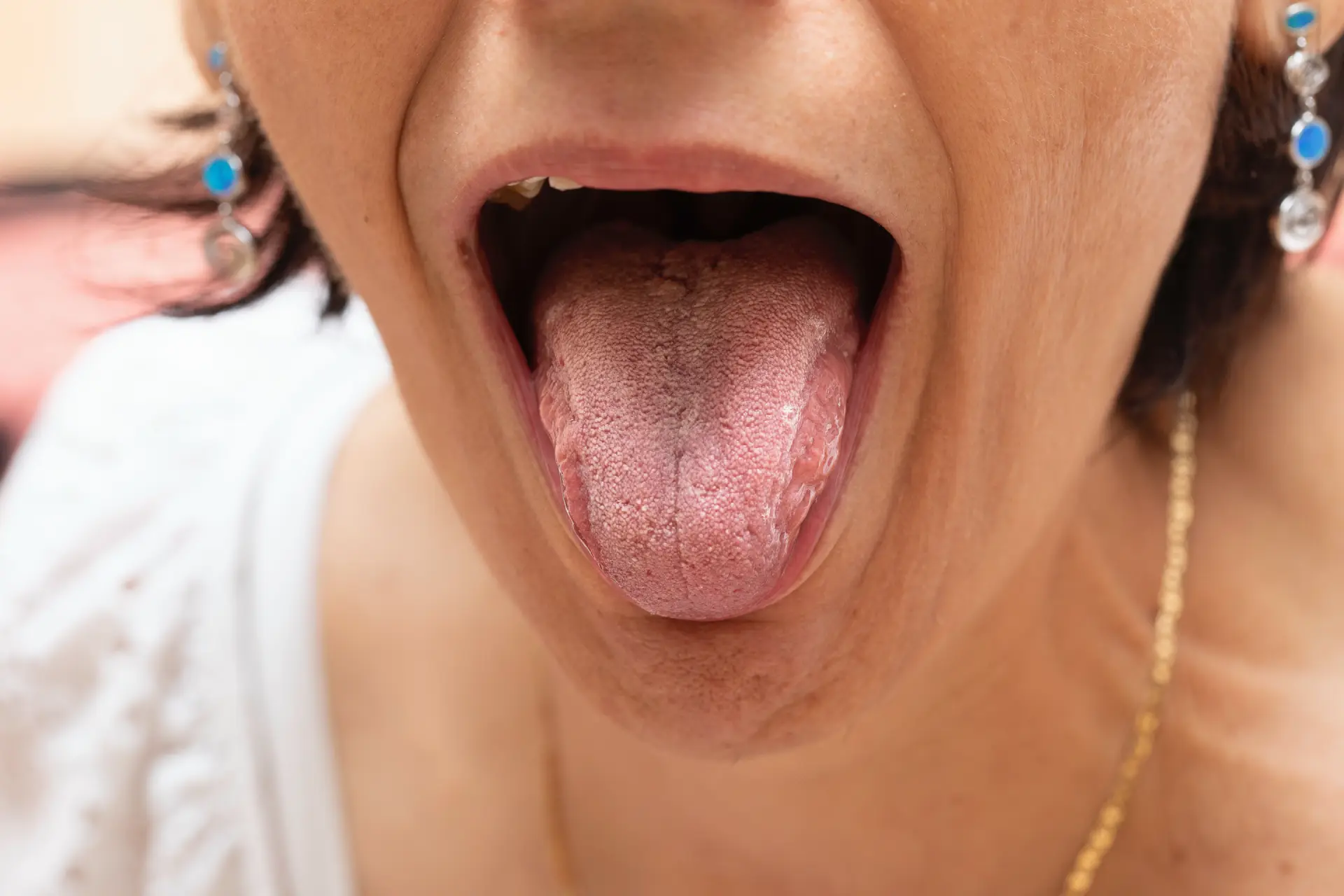
Black hairy tongue (lingua villosa nigra) is a condition in which the filiform papillae on the surface of the tongue become excessively elongated. Instead of naturally shedding, they begin to grow longer and accumulate bacteria, food debris, and pigments.
These accumulated substances cause the tongue to take on a dark color – ranging from brown to black – and a “hairy” appearance.
What are the symptoms?
The most characteristic symptom is a change in the appearance of the tongue, but other issues may also occur:
- dark, brown, or black coating on the tongue,
- elongated, “hair-like” papillae,
- a feeling of dryness in the mouth,
- bad breath,
- a metallic taste.
Although the symptoms may look serious, they are usually not painful.
Causes of black hairy tongue
The most common causes include:
- insufficient oral hygiene,
- smoking,
- frequent consumption of coffee and tea,
- use of certain medications (e.g., antibiotics),
- dry mouth,
- a diet low in foods that require chewing.
All of these factors promote the accumulation of debris and disrupt the natural shedding of the tongue’s papillae.
Is black hairy tongue dangerous?
In most cases, it is not a dangerous condition. The problem is mainly aesthetic and hygienic.
However, it should not be ignored. Long-term neglect of oral hygiene may lead to bacterial overgrowth and worsening gum health.
How to treat black hairy tongue?
Treatment mainly involves eliminating the causes and improving daily hygiene.
The most important steps are:
- regular cleaning of the tongue (e.g., with a scraper or irrigator),
- thorough tooth brushing,
- increasing water intake,
- reducing coffee, tea, and smoking,
- reviewing medications (after consulting a doctor).
In most cases, improving habits brings noticeable results within a few days or weeks.
Can you clean your tongue with an irrigator?
A dental irrigator can be a helpful addition to oral hygiene, as it helps flush out food debris and bacteria from hard-to-reach areas.
Although it does not replace mechanical tongue cleaning (e.g., with a scraper), it can support maintaining cleanliness and reducing buildup.
The Smilesonic brand offers the AquaFlow irrigator, which can be part of daily oral hygiene and support more thorough cleaning of the mouth—including around the tongue (thanks to a dedicated tip). It features a wide range of pressure settings, a reservoir that allows for a full irrigation session, and a comprehensive set with five interchangeable nozzles.
How to prevent recurrence?
To avoid the problem coming back, it’s worth adopting a few simple habits:
- clean your tongue daily,
- maintain thorough oral hygiene,
- drink enough water,
- limit stimulants (smoking, coffee),
- visit the dentist regularly.
Consistency in these habits helps maintain a healthy and clean tongue surface.a.
FAQ – frequently asked questions
Is black hairy tongue contagious?
No, black hairy tongue is not an infectious disease. You cannot catch it from another person, as it mainly results from individual habits and environmental factors.
Does a black coating on the tongue always mean illness?
Not always. In many cases, it is the result of accumulated debris and bacteria rather than a serious disease. However, if symptoms persist, it is worth consulting a doctor.
How quickly can you get rid of black hairy tongue?
Improvement may be visible within a few days after introducing proper hygiene. In some cases, the process may take several weeks, depending on the cause.
Is brushing your teeth enough?
Not entirely. Brushing your teeth is important, but cleaning the tongue and interdental spaces is also essential. The tongue is often where bacteria responsible for the coating accumulate.
Does an irrigator replace a tongue scraper?
No, an irrigator does not replace a scraper. However, it can support oral hygiene by flushing out debris and bacteria, helping keep the tongue in better condition.